
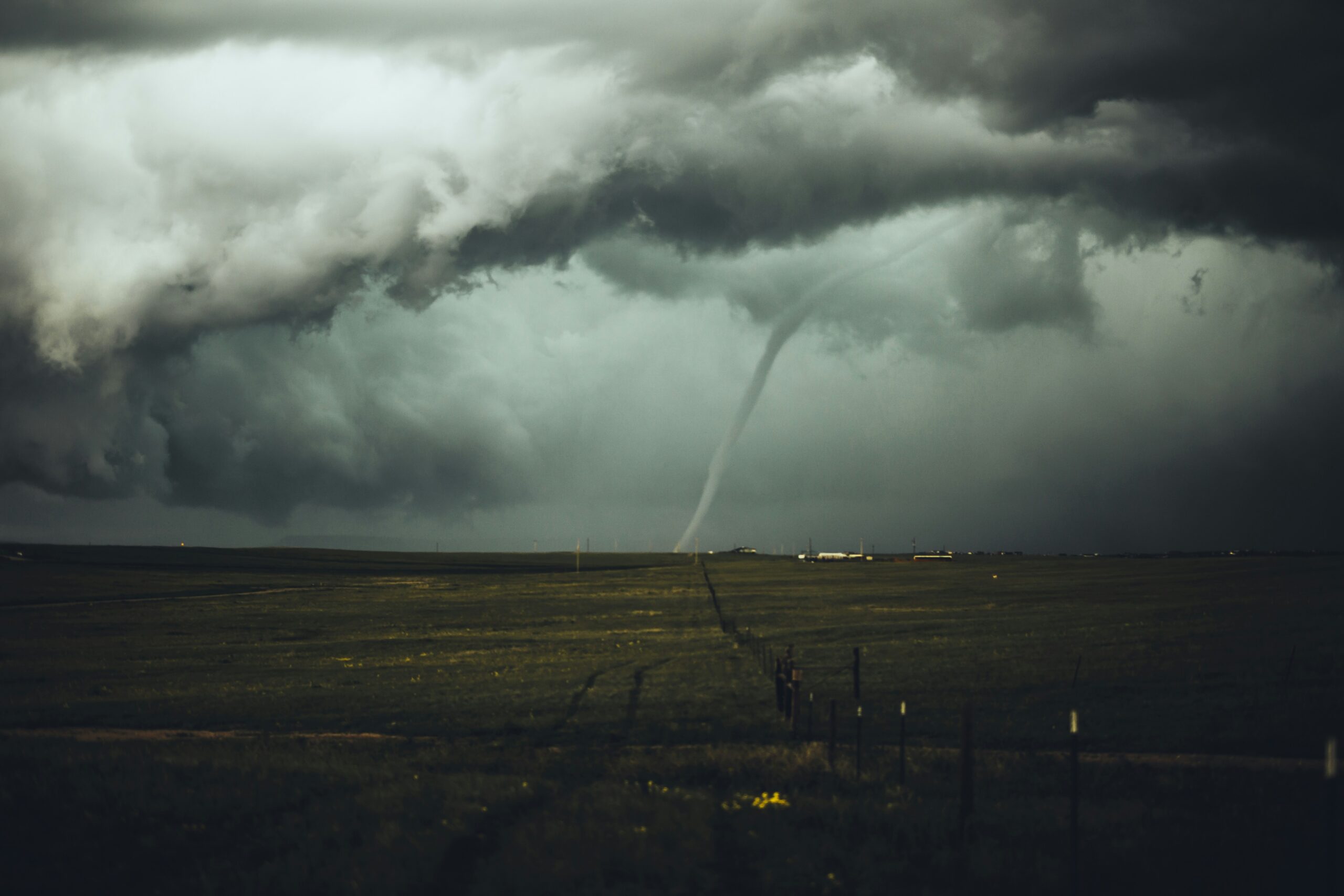
When people ask what is the worst tornado in history, there is no single measurement that can answer the question for every possible definition of “worst.” While tornadoes can be evaluated in numerous ways-by the loss of life and injury sustained, the sheer amount of destruction or the length and intensity of the path, or the sheer amount of community impact. But if the query is about the deadliest single tornado in U.S. History, then the answer is unequivocal-the March 18, 1925, Tri-State Tornado.
The tornado that ripped through Missouri, Illinois, and Indiana on that day left a documented path of approximately 219 miles and killed 695 people. Over two thousand others were injured, with the National Weather Service declaring it the deadliest tornado in U.S. History-with its path of 219 miles continuing as the record of the longest track single tornado on record.
It is not simply a tale of atmospheric phenomena. But the story of this devastation highlights how tornado science, forecasting, communication, and preparedness has changed in the last century.
Why the Tri-State Tornado Is Considered the Worst
The Tri-State Tornado is an event unlike any in American weather history; it was a massive, powerful storm produced by an unusual concurrence of weather elements. The tornado first touched down near Ellington in southeast Missouri at around 1:01 in the afternoon on March 18, 1925. It travelled toward the northeast through southern Illinois and crossed into southwest Indiana, dissipating near Princeton, Indiana, at 4:30 p.m.
That means for about 3 and a half hours the tornado produced damaging conditions over a distance of some 219 miles.
The NWS rated it as F5 on the Fujita Scale, which was then used to measure tornados based on wind speeds of 261-318 mph. The death toll is perhaps what makes this storm an unparalleled event. 695 people died in the tornado, and there were an additional 2,027 injured. The number of deaths is the highest caused by any tornado in U.S. History.
The tornado was extensive both in width and range of destruction: 13 counties in 3 states, along with many towns and cities, sustained extensive damage.
Within some towns a total destruction lasting mere minutes prevailed.
What Happened on March 18, 1925?
The tornado began in Missouri during the early afternoon.
The storm first made landfall just northwest of Ellington, based on records compiled by the National Weather Service. The tornado then cut across much of Reynolds, Iron, Madison, Bollinger, and Perry Counties in southeast Missouri, before lifting off over the Mississippi River and passing into Illinois.
When the storm reached southern Illinois, it turned deadly. Gorham was annihilated. There were 34 fatalities at Gorham and many subsequent communities along the damage path including Murphysboro, De Soto, Hurst-Bush, West Frankfort. During a particularly horrifying part of its track, several hundred died in less than an hour. Murphysboro had 234 deaths, the highest tally in the nation.
Not ready to stop, the tornado crossed the Wabash River into Indiana and took out Griffin and Princeton along the way. Of the 71 fatalities in southwestern Indiana, only 5 were attributed to events near the end of the tornado’s path northeast of Princeton.
How Long Did the Tri-State Tornado Last?
The tornado stayed on the ground for about three and a half hours, which is extremely long for one tornado.
It first touched down about 1:01 p.m. Near Ellington Missouri and then dissipated about 4:30 p.m. Near Princeton Indiana. In the time between then, the tornado was tracking generally northeast about 219 miles.
National Weather Service shows average speed of tornado moving over 62 mph, and a maximum forward speed of about 73 mph occurred between Gorham and Murphysboro.
That speed created an especially dangerous situation.
Even the forward movement alone could have been hazardous during a tornado. Because the Tri-State Tornado moved so fast that the communities in its path would have had minimal warning time between spotting it and receiving its most damaging winds.
How Powerful Was the Tri-State Tornado?
The Tri-State Tornado was rated as an F5 tornado under the original Fujita Scale, the most intense rating on that scale. The National Weather Service states winds topped 200 mph per historical damage estimates. But there’s a fundamental difference between historical and modern tornado rankings. The Fujita scale was created decades after the Tri-State Tornado had passed. Since no Doppler weather radar, no direct measurement of the wind speed or a thorough research of damage from 1925 exist to make it possible to provide a exact figure of the highest wind speed of Tri-State Tornado, not at all comparable to measurement of stronger and later Tornadoes you have to take with pinch of salt all estimates.
Based on the extent of the damage, the Tri-State Tornado clearly produced extremely powerful winds and would likely have been rated F5 under the original Fujita scale if it had been surveyed using modern damage-assessment criteria. However, no direct wind-speed measurements exist for the tornado, so its actual wind speed remains an estimate rather than a documented measurement.
Why Was the Damage So Severe?
The Tri-State Tornado’s destruction resulted from more than one characteristic.
However, coupled with its abnormal forward speed, high intensity, and ability to travel through populated communities, the elongated track gave it a high human cost. Furthermore, the outbreak’s impact occurred at a time when communities did not possess many of the tools people often consider to be the essence of severe weather preparation. Doppler radar, automated warning dissemination, widely dispersed warning sirens, emergency alert systems that tap into cell phone networks, and sophisticated numerical forecasting had yet to be conceived and refined.
That technical gulf represents the most profound piece of why the 1925 outbreak was so catastrophic.
When a rotating thunderstorm is spotted or is showing strong indications of becoming a tornado, today’s meteorologists track that developing danger with their radar; in 1925, people mostly had to rely on looking out the window for a darkening, lowering sky, listening for information transmitted locally by phone, by people relaying messages, by word of mouth through local stores or the town hall, or reading their papers. Thus, the severe hazard often rolled into a community before most inhabitants knew it was occurring or, once it did, why.
The Human Cost Was Greater Than a Death Toll
Numbers provide a way to measure disasters, but they do not fully describe what happened.
The Tri-State Tornado was associated with over 2,000 injuries, and roughly 15,000 damaged homes, according to records compiled by the National Weather Service. Communities were decimated; households were without housing; the local business supply chain vanished; schools shut down; livestock lost on farms disappeared; transit systems were annihilated. It was the kind of catastrophic weather that left some regions months in recovery.
Of specific note from the National Weather Service’s account is this: 234 people died in a town of Murphysboro.
Thirty-three people died in a school house in De Soto. This evidence is all part of what explains why this ‘big storm’ of 1925 deserves far, far better.
Was It Really One Continuous Tornado?
This is one of the more interesting questions surrounding the event.
Historically the Tri-State Tornado is a single tornado that tracked more than 200 miles across the region, 219 to be specific. But due to it being nearly a hundred years ago and data not readily available like it is today, our ability to map it relies on the same piecing together data from photographs, newspaper accounts, damage surveys, and eyewitness reports.
Also, it’s understood that multiple vortices can make up the damage path, along with multiple tornadoes, due to their ability to persist or be complex and make’s over its entire lifespan, which long-lived supercell thunderstorms can do. Even today, the modern-day run on the National Weather Service still labels the event as a single tornado with that 219-mile tracking, an individual record as well.
That’s makes the tornado extra remarkable as even considering modern knowledge on tornado’s.
Why the 1925 Tornado Was So Difficult to Predict
“One of the largest differences of the Tri-State Tornado than a modern severe weather event is the warning environment.” “In 1925 there was no radar networks available compared to modern technology and computers,” officials say. “We also have a greatly different infrastructure for U.S.
Weather warnings now.
People essentially had to rely on visual and acoustic observations and limited communication means.” “Historical witnesses accounts of the tornado often describe the storms appearing as large, dark, rain-wrapped columns which may not present as an obvious tornado “funnel,” say storm experts.” That can make the event, or others similar, hard to recognize “when it’s hard to see the developing circulation when it’s obscured by heavy rain, nighttime, darkness, debris or other forms of precipitation, [especially if you don’t see any”.” The bottom-line still remains; don’t wait for something to be visible if official tornado warning has been issued.
How Does It Compare With Other Historic Tornadoes?
While the Tri-State tornado is the deadliest tornado in US history, it’s not the answer to all forms of the question “what is the worst tornado?” Other storms can have different statistics or stand out for entirely different reasons, making broader severe weather information useful for understanding how tornadoes compare with other dangerous weather events.. The 2011 Joplin tornado remains a devastating disaster and one of the worst US tornadoes of the modern age.
The 1999 Bridge Creek-Moore tornado remains infamous and infamous, thanks in part to its remarkable wind speeds.
And the 2013 El Reno tornado is etched into meteorological history due to its incredible width and its bizarre complexity. So to answer all kinds of “worst tornadoes,” we examine these diverse events:
What Made the Tri-State Tornado Historically Unique?
Several records make the 1925 storm exceptional.
According to the National Weather Service, the tornado had:
- A 219-mile path, the longest recorded for a single tornado.
- 695 fatalities, the highest death toll from a single U.S. tornado.
- About 2,027 injuries.
- Approximately 15,000 homes destroyed.
- A duration of about 3.5 hours.
- An average forward speed of about 62 mph.
- A maximum recorded forward speed of about 73 mph during part of its track.
However, those statistics should not be seen in isolation, but in the context of why the storm holds such a position in the history of America’s tornadoes.
What Can Modern Communities Learn From the Disaster?
The biggest asset of studying deadly past events is not the rote remembrance of statistics, but what those events tell us about risk. A tornado as powerful as the Tri-State Tornado can pose different risks than a slower-moving, more powerful one traveling across open country because speed, the duration over time and distance, number of people present, construction practices, warning time available, and visibility all interact with weather events to shape their impact. Today’s sophisticated weather warnings often offer a considerable chance for protection; of course, if a tornado is about to strike the only a warning is good for is if you actually do something when you see the warning.
The most important action to take is swift evacuation to a safe, protected place, while understanding basic tornado safety tips can help people know where to shelter and how to respond when a warning is issued.
Otherwise, getting quickly into an innermost room on the lowest level and getting away from any windows will afford you better protection than staying anywhere above ground where you might be caught up. The one important word is fast, for the time when warning is likely the greatest value isn’t a good time to wait for confirmation of what we all expect to see coming.
The Difference Between the Worst Tornado and the Strongest Tornado
Searches for what is the worst tornado in history often mix together several different questions.
“Worst” could translate to deadliest. “Strongest” could translate to estimated wind speeds. “Largest” could relate to diameter. “Longest” could describe how many miles a tornado traveled or how many hours it existed. “Most destructive” likely translates to total property loss.
Those words and concepts shouldn’t be used synonymously.
In the United States, the Tri-State Tornado qualifies as an especially historic contender due to the extraordinary number of fatalities that occurred and the extreme length it is estimated to have traveled across the countryside.
Still, that don’t mean there’s evidence proving it generated greater wind speeds than any other tornado throughout history. Historical tornadoes lack adequate ground recordings for that level of comparison.
It is crucial to maintain integrity with historical record to avoid turning historical disasters into legend.
Why the Tri-State Tornado Still Matters
A century later, the Tri-State Tornado remains more than a historical entry in a list of severe storms.
This is a time when meteorologists lacked proper methods of determining which storms would cause tornadoes, and the public lacked an adequate way of learning about upcoming tornadoes far enough in advance. The study of this tornado can help show why the advancement of meteorological observations, public warnings, sheltering and public notification are important today.
March 18, 1925, is now referred to by the National Weather Service as the worst tornado event in U.S. History. It also serves to put today’s tornado catastrophes in perspective; much technological advancement has been made but tornadoes are still known to produce severe and deadly damage in minutes. The ultimate purpose of modern tornado forecasting is not to make tornadoes harmless-it is to give people the information necessary to avoid being in one.
Conclusion
So, what is the worst tornado in history? If the question refers to the deadliest single tornado in U.S. history, the answer is the 1925 Tri-State Tornado. By March 18, 1925, the 219-mile path it cut across Missouri, Illinois, and Indiana claimed 695 lives, injured over 2,000, and shattered towns along the way.
Its place in history is owed to the unusual shape of the storm’s path combined with its unprecedented forward motion, immense destructiveness and staggering death toll. But its significance goes beyond the record. The disaster highlights the role that early warnings, communication, sturdy shelter and informed judgment can play in averting loss of life and property.
The Tri-State Tornado demonstrates that extreme wind speed alone does not determine how dangerous a storm can be.The truly catastrophic are those combining immense power, unfortunate exposure, and minimal escape time. Recognizing this distinction elevates the account of this 1925 disaster from a simple historical record to a lesson for communities preparing for and reacting to severe weather.
Frequently Asked Questions
1. What is the worst tornado in history?
For the United States, the 1925 Tri-State Tornado is generally considered the worst single tornado because it caused 695 deaths, the highest recorded death toll from one U.S. tornado. It also traveled approximately 219 miles across three states.
2. When did the Tri-State Tornado happen?
The Tri-State Tornado struck on March 18, 1925.It began in southeastern Missouri shortly after 1 p.m. and eventually dissipated in southwestern Indiana later that afternoon.
3. How many people died in the Tri-State Tornado?
The tornado killed 695 people across Missouri, Illinois, and Indiana. The National Weather Service identifies this as the highest death toll from a single tornado in U.S. history.
4. How far did the Tri-State Tornado travel?
The tornado traveled approximately 219 miles, making its path one of its most extraordinary characteristics. The National Weather Service lists this as the record path length for a single tornado.
5. Was the Tri-State Tornado an F5?
Yes. Analysis of the Historical Damage put it as an F5 on the old Fujita Scale. Unfortunately, direct wind measurements are not possible and weren’t possible in 1925 so wind speed estimates are based on damages.
6. Could a tornado like the Tri-State Tornado happen today?
Though today’s weather can generate a “rogue” storm like that one with some very bizarre characteristics, there isn’t the ability to precisely “rewind” 1925 event exactly in time in the way people think by looking at tornado trends as this one implies people do.
7. Why is the Tri-State Tornado still important today?
It remains important because of how a single, long-track, fast-moving tornado can move across several communities wreaking havoc along its path. Its history provides an eye-opening lesson in the importance of modern tornado warnings and the need to act fast.