Why Do I Cough When I Eat Ice Cream?
If you’ve ever wondered, why do I cough when I eat ice cream, you’re not alone. A cold, creamy food can trigger coughing in some people, particularly when the reaction happens repeatedly or immediately after taking a bite.
One piece of good news: If coughing after eating ice cream doesn’t come with serious symptoms, it may not be anything to worry about. Potential causes range from cold temperature, scratchy throat, dripping nose, reflux, to even something in the ice cream itself.
The helpful question is not if ice cream causes coughing, but, what is happening in my body as I eat it?
Knowing the pattern of your cough will help you determine whether adjusting your ice cream habits will make enough difference, or whether it is time to talk with a doctor about the symptom.
Why Can Ice Cream Trigger a Cough?
Ice cream combines several characteristics that may affect the throat and airways.
It is:
- Very cold
- Often creamy and high in fat
- Usually dairy-based
- Sometimes high in sugar
- Frequently eaten quickly
- Sometimes made with ingredients that can trigger sensitivities
For some people, the cold temperature itself may stimulate a cough reflex. For others, the issue may have more to do with reflux, allergies, asthma, or another underlying condition.
This is why why do I cough when I eat ice cream doesn’t have one universal answer.
Cold Sensitivity May Be the Simplest Explanation
One possibility is sensitivity to very cold foods.
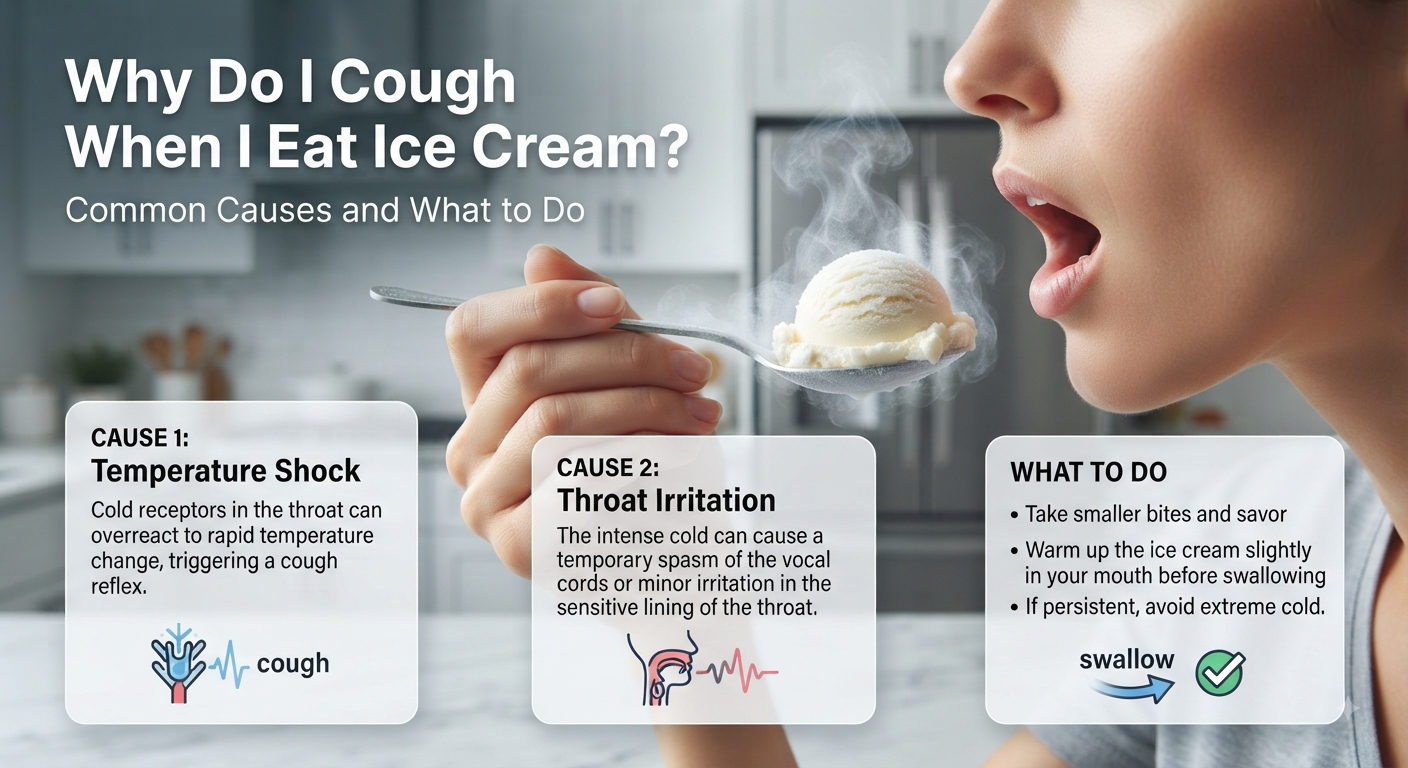
The cold air from your ice cream could immediately bring down the temperature of the lining of your throat and airways, which your irritated throat may react to with a sudden cough. Sometimes a cough will develop right after the first bite, and subside fairly quickly.
You may also experience something similar with:
- Ice water
- Frozen desserts
- Very cold smoothies
- Ice pops
- Chilled drinks
If cold foods consistently trigger the same response, temperature sensitivity may be worth considering.
Eating Ice Cream Too Quickly Can Make It Worse
The rate at which food is eaten is another factor which can be significant.
If someone eats a large quantity of very cold food such as ice cream quickly then large amounts reach the mouth and throat in rapid succession.
Rapid eating can result in increased amounts of air being swallowed as well as possible trauma to the throat.
Attempt to increase eating time and decrease the amount of ice cream per mouthful. Having the food slightly defrosted can also ease ingestion, but is probably not necessary and could detract from eating it!
Even making such a small adjustment may distinguish between the affects of speed and temperature
Postnasal Drip Can Trigger Coughing
Another possible explanation for why do I cough when I eat ice cream is postnasal drip.
Postnasal drip occurs when mucus from the nose and sinuses moves toward the back of the throat.
That mucus can irritate the throat and trigger coughing.
If you already have:
- Nasal congestion
- Seasonal allergies
- A runny nose
- Sinus irritation
- Frequent throat clearing
then eating a cold food may make an existing throat sensation more noticeable.
In this situation, the ice cream may not be the original cause of the cough. Instead, it may simply be triggering a cough reflex in an already sensitive throat.
Does Dairy Actually Cause More Mucus?
A common perception is that dairy increases mucus production.
It’s a bit more complicated than this. Milk and other dairy products can leave a temporary coating or a coatinglike sensation in the mouth and throat. This sensation can give some of us the impression of increased mucus production. It does not necessarily indicate that your body’s mucus production has increased.
However, if your coughing routinely follows consumption of a dairy product, it makes sense for you to then test the impact of different dairy products on your cough before blaming the ice cream.
Acid Reflux Can Cause Coughing
20. Acid Reflux A possible reason is acid reflux. It happens when contents in your stomach travel into the food pipe, and while you know of its well-known symptoms like a burning sensation in your chest, in some individuals, it’s associated with an itchy throat or cough. The coughing triggered by acid reflux often surfaces following a meal. Ice Cream is often important to be acquainted in, as many of the ice creams have substantial amounts of fat content that are culprits when aggravating acid reflux for some people.
If your coughing is accompanied by:
- Heartburn
- Sour taste
- Throat irritation
- Frequent throat clearing
- Hoarseness
- A sensation of something in the throat
reflux may be worth discussing with a healthcare professional.
Why Does Ice Cream Make Me Cough at Night?
The Timing Can Tip you Off When wasice Cream consumedIf you’re coughing soon after an ice cream treat-especially before heading to the pillow, it may be a clue that reflux is playing a role. Lying down after eating may intensify your symptoms for the same reason, and it’s the combo of what you ate, the timing and whether or not you are horizontal that cause an effect.
Could an Allergy Be Responsible?
Food allergies can cause a range of symptoms, and dairy ingredients are among the possible food allergens.
A cough by itself doesn’t prove that you have an allergy.
However, if coughing after ice cream occurs together with symptoms such as:
- Hives
- Swelling
- Wheezing
- Difficulty breathing
- Repeated vomiting
- Tightness in the throat
seek urgent medical attention, particularly if symptoms develop rapidly.
A suspected food allergy should be evaluated by an appropriate healthcare professional, with reliable food allergy symptoms and treatment information used to understand possible warning signs rather than diagnosing the reaction through repeated food experiments.
Lactose Intolerance Is Different From an Allergy
It’s also important to distinguish lactose intolerance from a milk allergy.
Lactose intolerance occurs when the body has difficulty digesting lactose, the sugar naturally present in milk.
Common symptoms include digestive problems such as:
- Bloating
- Gas
- Abdominal discomfort
- Diarrhea
A milk allergy involves an immune response and can produce a different range of symptoms.
If coughing is your main reaction to ice cream, don’t automatically assume lactose intolerance is responsible; understanding lactose intolerance symptoms and causes can help distinguish digestive intolerance from other possible reactions.
Could Asthma Make Cold Foods Trigger Coughing?
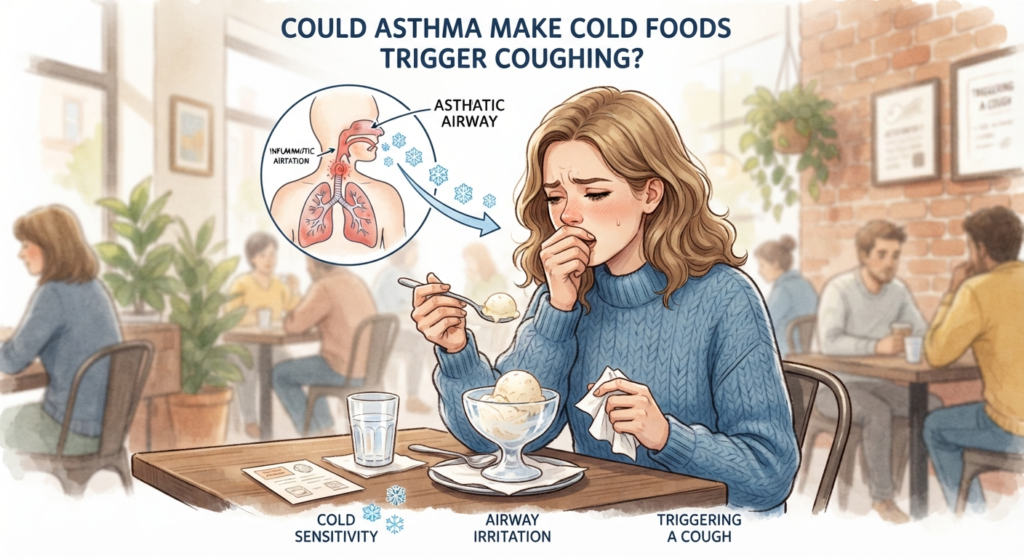
If someone has sensitive airways, they may have a cough when exposed to specific things in the environment or during physical exercise.
Known asthma triggers for some individuals include cold air and some individuals may get symptoms around the cold food or drinks themselves.
Seek advice from a healthcare professional If you have a cough, wheeze, tight chest or difficulty breathing often, especially around exercise, extreme cold or other triggers, broader respiratory health and wellness tips may also help you understand when symptoms deserve professional attention.
Don’t assume a cough when you’ve just eaten an ice cream mean you have asthma.
Could the Problem Be the Texture?
Ice cream can be thick. Some people will discover that thick foods are more problematic to swallow comfortably if there may be an underlying difficulty consuming the food. It may be necessary to obtain help if swallowing difficulties occur whenever consuming and consuming many forms of meals- not merely whenever you had been affected by frequent, post-flu, hack.
Pay Attention to the Timing
When investigating why do I cough when I eat ice cream, timing is one of the most useful clues.
Ask yourself:
Does the cough begin immediately?
That may suggest throat or temperature sensitivity, swallowing issues, or an immediate reaction.
Does it happen several minutes later?
Other factors, including reflux, may be worth considering.
Is the problem limited to when you lie down after eating?
That pattern may point toward reflux.
Does it happen with other dairy products?
That may suggest the issue isn’t specific to ice cream.
Does it happen with all cold foods?
Temperature sensitivity may be more relevant.
Keep a Simple Food and Symptom Record
If the reaction keeps happening, you can write down what you ate and what happened afterward.
Record:
- Type of ice cream
- Approximate amount
- Whether it was very cold
- How quickly you ate it
- Other foods eaten at the same time
- When coughing started
- How long it lasted
- Any additional symptoms
Patterns may become easier to recognize over time.
A record can also give a healthcare professional more useful information if you decide to seek advice.
Try Small Practical Changes
If you have only mild symptoms, without warning symptoms, try changing only one thing at a time.
For instance you could eat the ice cream more slowly and let it melt a little.
Do not try to alter many things at once if your intention is to identify what causes the trigger.
If the cough subsides once you’ve changed one thing, you’ve got a valuable piece of evidence.
However, do not subject yourself repeatedly to a food if you have had symptoms indicative of a serious allergic reaction.
Don’t Assume Ice Cream Is Always the Cause
A common mistake is to blame the most obvious food.
Suppose you eat ice cream after dinner and begin coughing.
It may be tempting to conclude that dairy caused the reaction.
But the actual factor could be:
- The meal itself
- Reflux
- Cold temperature
- A flavoring ingredient
- A food allergy
- Existing congestion
- Eating too quickly
- Lying down soon afterward
Looking at the whole situation provides a more accurate picture.
When Should You See a Doctor?
Coughing every once in awhile after enjoying some of a very ice-cold treat doesn’t warrant further investigation. Coughing from food may be reason to seek out a diagnosis if it’s more widespread if the symptoms happen often and make it so it’s becoming difficult to consume foods. If you always cough while consuming food, have trouble chewing, always feel the need to clear your throat, or you have consistent respiratory infections or wheezing in addition, discuss it with a medical professional.
A health care professional is much more prepared to determine your symptoms.
It’s often less difficult to know the why when thinking about the entirety of your medical conditions not the one.
When Is Coughing After Ice Cream an Emergency?
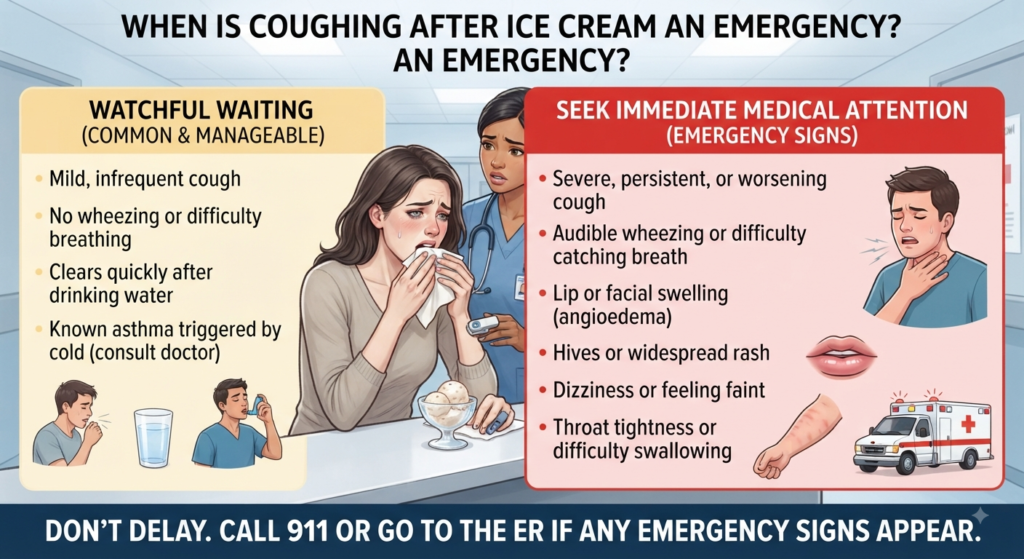
Seek urgent medical attention if eating ice cream is followed by signs of a potentially severe allergic reaction, especially:
- Trouble breathing
- Significant wheezing
- Swelling of the lips, tongue, or throat
- Severe throat tightness
- Fainting or feeling severely weak
A rapidly developing combination of these symptoms can require emergency treatment.
Do not attempt to determine the exact cause yourself during a potentially serious reaction.
Common Reasons at a Glance
| Possible Cause | Typical Clue |
| Cold sensitivity | Cough begins soon after very cold food |
| Postnasal drip | Congestion, throat clearing, or nasal symptoms |
| Reflux | Cough after meals, especially around lying down |
| Food allergy | Cough with hives, swelling, wheezing, or other allergic symptoms |
| Asthma or airway sensitivity | Cough with other breathing symptoms |
| Eating quickly | Symptoms improve when eating more slowly |
| Swallowing difficulty | Coughing occurs with many foods or drinks |
These clues aren’t a diagnosis. Several factors can occur together.
What If You Cough Every Time You Eat Ice Cream?
If the pattern appears strongly enough, take notice.
Find out if the pattern holds for other types of cold food as well as if dairy products are the culprits for your cough.
If you cough exclusively on ice cream, then think if that is what’s special – it can be temperature or ingredient, not just dairy.
If cough accompanies number of other meals and snacks then that becomes important and need to discuss with the doctor.
Final Thoughts
If you’ve been asking why do I cough when I eat ice cream, there are several possible explanations.
Cold triggers can inflame a tender throat and postnasal drip can provide excess mucus and a cough trigger. However, depending on your symptoms, other causes could include reflux, airway sensitivity, food allergies or a swallowing problem. Rather than singling out dairy, consider it a part of looking at a larger pattern.
See if the coughing happens with other cold food, if other foods or dairy causes Cough, How soon does the cough begin, Whether and when another symptom starts.
A cough that comes at a high frequency of foods and is associated with breathing problems, swelling, the ability to Swallowing difficulties and other symptoms warrant seeking the assistance of an expert to address.
Understanding why do I cough when I eat ice cream starts with recognizing that the dessert may be the trigger rather than the underlying cause. Paying attention to the full pattern can help you decide what to do next.
FAQs About Why Do I Cough When I Eat Ice Cream?
Why Do I Cough When I Eat Ice Cream but Not Other Foods?
The cold temperature, texture, certain ingredients, or even the pattern of consumption may have contributed to it. If it occurs with specific brands, it may be helpful to compare these items’ ingredients and preparation methods rather than assuming all dairy products provoke such a reaction.
2. Can cold ice cream provoke coughing?
It is possible for some individuals, as extremely cold delicacies may irritate the throat and airways and cause bouts of coughing in those with sensitive respiratory systems. Eating smaller portions and letting it soften at room temperature may assist temperature-sensitive individuals.
3. Does it cause mucus?
Unfortunately, dairy products are known to cause excessive congestion and a thicker consistency of mucus in some individuals. It may not be an indicator of increased production of mucus, just a change in its consistency.
4. Can acidity result in coughing?
Unfortunately, yes, as some varieties are high in fat and may aggravate some individuals with acid reflux, irritating the delicate tissues in the esophagus and provoking a coughing fit as a result. Individuals noticing a correlation between eating ice cream and subsequent coughing episodes should speak with a medical professional about their concerns.
5. Can this lead to a milk allergy?
A cough following the consumption of dairy products may be an allergic response, although it is not definitive proof of a food allergy, as other symptoms are typically present alongside it. Individuals experiencing difficulty breathing, swelling, hives, or a tight feeling in their throat after consuming ice cream should seek emergency medical treatment.