A sudden loss of power to one room can make a homeowner wonder how to fix a tripped breaker without making the situation worse.In fact, many time it can seem simple – figure out which breaker flipped off, unplug the appliances that might have tripped the breaker and reset the breaker in the proper way. But that process of resetting is just a fraction of the job.
Why? A circuit breaker is a failsafe, a built in protection. It should shut itself off when either there are more items plugged into one circuit than are safe (and tripping), or when there is a ground fault or short circuit occurring. When you force a switch back to its closed or on position, without taking a good look at what led to it tripping, you likely leave the problem still exist. The U.S. Consumer Product Safety Commission stresses doing something more than resetting a breaker as the reason it trips may not just be overloaded conditions.
That can be very important. One trip, after too many high powered appliances had been running simultaneously on a given circuit may well be an accurate indication of an overloaded circuit being normal as an event, rather than signaling a definite problem like a shorted appliance, wires sparking out somewhere in the walls, or a damaged recepticle or device, which can create such events when forced close time and time again.
What a Circuit Breaker Actually Does
You can imagine a circuit breaker like a controllable safety valve that manages the flow of electricity. Circuits have limits and the breaker acts to protect the wiring by opening the circuit when the flow of electricity, current, becomes too much or when it detects some anomaly that warrants the circuit opening. An example of what could over-load a circuit is when you plug in several appliances that use a significant amount of current, such as a space heater, microwave, toaster, etc.
All from the same circuit at one time.
Short circuits result in very large amounts of electricity to flow through the wiring at once. Circuit breakers are built in such a way that they can detect abnormal electrical currents, and by opening the circuit they can help prevent the wiring from being damaged from overheating. Another newer device that is commonly installed in modern homes is a AFCI breaker which has the ability to detect arch-faults. Arch faults occur as the wires to or in an electrical device degrade, and can produce large localized amounts of heat that may result in fires.
Next time that your circuit breaker flips, you can view that as information instead of an annoyance that your electrical system has detected a need for concern.
How to Tell Whether the Breaker Actually Tripped
Locating the appropriate breaker can often be more difficult than resetting it.
Although a tripped breaker may seem completely switched to off, many breakers only shift slightly toward center. If several switches are packed closely together this middle-thrown position can be rather unobvious.
First, pinpoint the area of the house where the electricity has stopped flowing. If the lights and/or outlets in a particular room have quit working while rest of the house seems fine, look to the breaker panel for a switch that has pulled toward an unexpected direction relative to the others.
Do not remove the electrical panel cover and attempt to service the panel or any of the wiring within; just use the breaker switch.
If there is not readily apparent switch you know for sure should be tripped, then you should not blindly flip one and the others to attempt to identify the proper breaker.
How to Fix a Tripped Breaker Safely
1. Turn off or unplug appliances on the affected circuit
Turn off or disconnect equipment plugged into the circuit before attempting to reset. Keep an eye on equipment with major electrical requirements, such as heating devices and appliances such as ranges or portable air conditioners that can cause an overloaded circuit. Nothing needs to be pulled apart or handled from any outlet or wiring.
You just need to lighten the load on the breaker when resetting it.
According to the ESFI, it’s a good idea for consumers to disconnect equipment plugged into the room where the breaker tripped prior to resettin the tripped breaker.
2. Locate the electrical panel
Locate the electrical panel, or a branch circuit subpanel for the house.
Ensure access to the area around the panel. Do not handle any wiring, terminators or other internal components that are exposed, un-isolated, etc.
If any of the conditions as listed below (burning, melting, moisture penetration, etc.) are noted on the panel, do not attempt to reset it.
3. Identify the tripped breaker
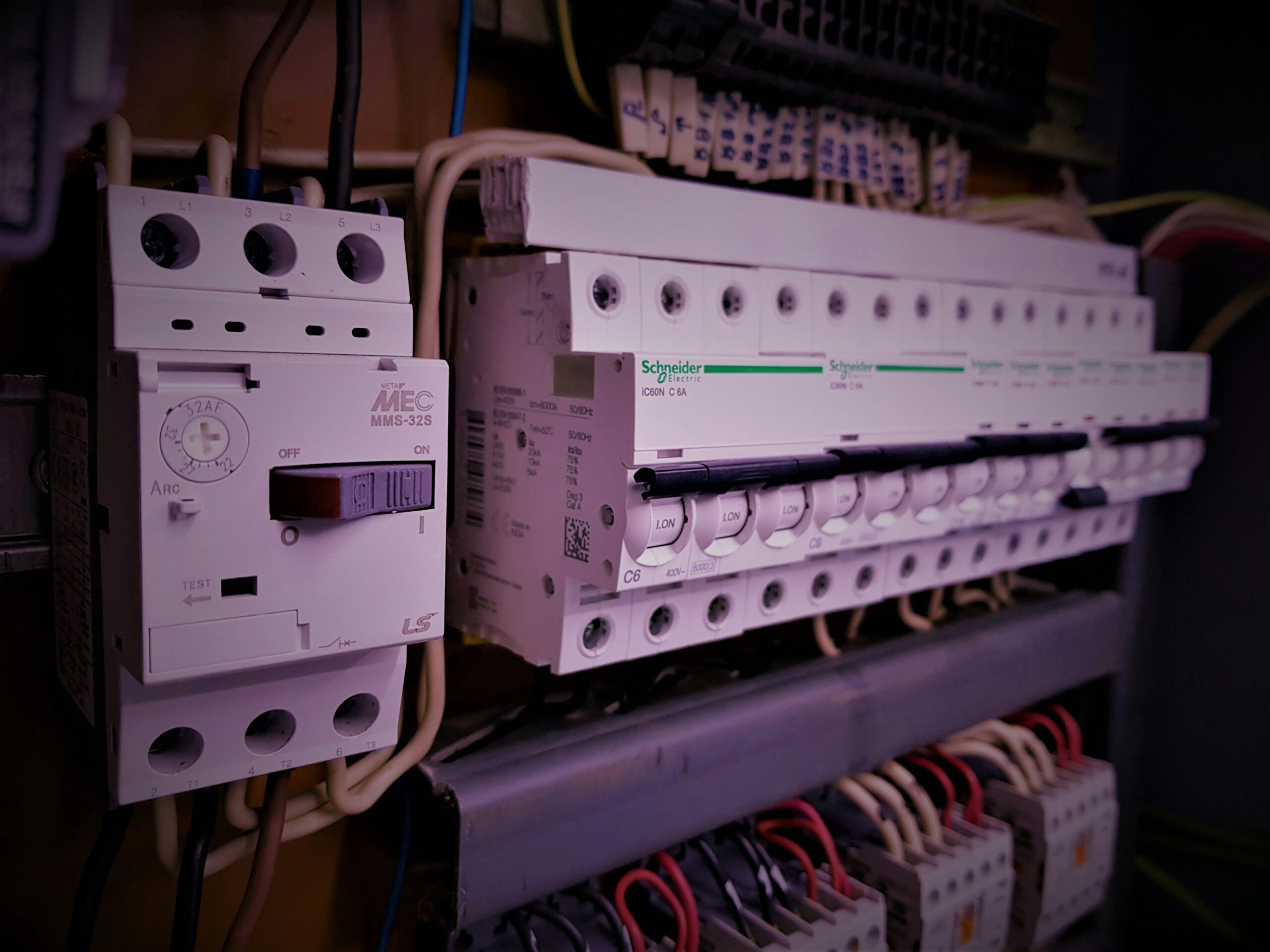
Locate a breaker that is clearly marked to the OFF position, or one that is centered between ON and OFF. These switches often have two clearly marked positions indicating tripped and reset. However, the evidence is not always so clear. Particularly in a well-used service panel, one cannot always rely on visual confirmation that a breaker is indeed tripped, even when it can be distinguished from others.
Should an identification tag or other source of documentation be available that indicates which breaker serves the circuit that’s down, use it to assist your diagnosis.
4. Move the breaker completely to OFF
If the breaker has tripped, you might have to press hard on the ON position for it to reset the breaker. Be aware this is true since just nudging the ON switch might not set back internal parts of the breaker itself. This general guideline is what the CPSC follows also. If the breaker style, the tripped breaker might must to be moved toward OFF first, again and back again toward ON position.
5. Move it back to ON
Once the electrical demand is reduced turn on the breaker from OFF to ON. If the breaker is now ON and the power is back, the occurrence of the initial condition may have resulted from an overload or another transient condition. This does not mean the job is done; think about what may have been drawing power just prior to tripping. If there were a number of high-draw items on the circuit, do not operate them at the same time before properly assessing the circuit capacity and appliance combination.
6. Test the affected area
Check whether the lights and outlets have regained power.
If everything works normally, reconnect appliances gradually rather than turning everything on at once. This can help identify whether a particular appliance is contributing to the problem.
For example, if the breaker remains on until a particular appliance is plugged in or switched on, that appliance deserves attention. Stop using a product that appears to be malfunctioning and have it inspected or repaired appropriately.
7. Stop if the breaker trips again
This is where a simple reset becomes an electrical troubleshooting issue.
If the breaker immediately trips again, do not keep flipping it back on.
Repeated tripping can indicate an overloaded circuit, short circuit, defective appliance, damaged wiring, or another fault that requires diagnosis. ESFI specifically advises contacting an electrician when the problem continues after resetting the breaker.
Why Does a Breaker Keep Tripping?
A breaker that repeatedly trips is telling you something different from a breaker that trips once.
The circuit is overloaded
An overloaded circuit may occur when too many devices are drawing current at the same time.
This is especially common when several high-power appliances share one circuit. Moving one appliance to a different circuit may reduce the immediate load, but homeowners should not assume that every nearby outlet belongs to a separate circuit.
The underlying electrical layout matters.
An appliance may be faulty
Sometimes the circuit itself is not the problem.
An appliance’s, cord’s, plugin’s, or any part of a component can have an issue and can make an electrical short. If the breakers start kicking off to just one appliance be sure and quit using that particular item until its gotten a through evaluation. CPSC would like to remind us all that when things come to us with faulty parts, power cord issues, power cord plugin issues or for anything electrical take a complete time out and let’s have a qualified repair person review your item.
There may be a short circuit
A short circuit can cause a breaker to trip rapidly.
Unlike an ordinary overload caused by gradually increasing demand, a short circuit involves an unintended electrical connection that can create a dangerous overcurrent condition.
This is not a problem to diagnose by opening outlets, switches, or the panel unless you are qualified to perform electrical work.
Wiring may be damaged
Faulty conditions in the wiring include damaged insulation, poorly made connections, worn components, or other wiring issues. Arc faults are of special concern as damaged or stressed wiring can cause electrical arcing, which can then become a fire hazard. AFCI protection is intended to assist in identifying some forms of arc fault.
What If the Breaker Trips Immediately After Resetting?
An immediate trip deserves caution.
In that scenario, if you disconnect the plug-in and flip the breaker on and flip it immediately on again, simply leave it off. The breaker could be detecting an ongoing circuit fault instead of a temporary overload. From there, simply leave that breaker in the off position for an amateur homeowner to be safe and have a professional electrician figure out what is going on. Flipping a breaker on and off will not fix an underlying circuit issue; it is only doing you an attempt at reconnecting the power.
What If Only One Appliance Causes the Trip?
This situation can provide a useful clue.
Suppose a breaker remains on when the usual room appliances are operating but trips Whenever you plug a specific heater or power tool, and a kitchen appliance is put into operation. Could the appliance be faulty at the factory, or does this extra load push the circuit past the amount that is safe for them to carry? Never assume that replacing this tripped breaker with one of larger ampere capacity would prevent future occurrences.
When this is done, not only the extra device but all on the circuit as a rule have some amount of protection from overload they should have previously had.
The breaker rating was to ensure adequate protection of the electrical systems being operated. According to ESFI, do not replace an overload relay or other electrical protective device with one that has an incorrect rating when an existing safety device trips.
What You Should Never Do After a Breaker Trips
Some responses can turn a minor electrical interruption into a much more serious safety problem.
Never repeatedly reset a circuit breaker that trips immediately.
Never install a breaker with a higher amperage rating simply to stop nuisance trips.
Never bypass a breaker.
Do not remove the panel cover to access or inspect energized components unless you are authorized and properly qualified to work on energized electrical equipment.Do not continue operating any appliance that it gives signs of posing a danger from electrical overload. Do not put yourself in risk through neglecting and using devices with burnt plastic smell, scorch marks, burnt odor or melting plastics; also ignore devices that emit sounds like “buzzing”, heating up excessively, emitting smoke or showing evidence of evident damage in wires/conductors.
Circuit breakers were made to ensure safe electricity usage and they do trip if something unsafe occurs.
They are not there to be taken for a roadblock; do understand its reason as recommended by the CPSC to seek explanation rather than setting breaker to default operation and continue to use that appliances.
When a Tripped Breaker Requires an Electrician
A homeowner can often perform a basic breaker reset, but diagnosis and repair are different matters.
Professional help is appropriate when the breaker repeatedly trips, will not stay on, trips under a normal load, or appears damaged.
An electrician should also be brought in to look at electrical components if they emit burning smells or feel hot; appear scorched; make popping, sparking, buzzing, or crackling sounds; are frayed, chewed or damaged, have water nearby; or emit smoke. Older electrical panels or unique or old electrical panels may warrant an especially critical eye.
The CPSC reports recalls of circuit breakers that failed to trip in overload situations-another example of the importance of the condition and compatibility of electrical devices. A qualified electrician can tell you if the fault lies with your overloaded branch circuit, the appliance in question, the wiring system, a faulty breaker, or some other cause which may not be safely determined through the method of trial and error.
A Tripped Breaker vs. a Power Outage
Not every loss of electricity is caused by a breaker.
If your entire home has no power, it could be in your utilities, service entrance or else where.
If you’ve only lost power to one circuit, the main breaker or another downstream protective device takes more into consideration. Some homes may also feature GFCI outlets, a plug-style device that can actually disable power to downstream outlets. When one of those outlets trip, you can have it seem like your breaker has gone out when it’s hasn’t moved in your service panel. This highlights why your investigation shouldn’t start with your panel.
How to Prevent Future Breaker Trips
The best strategy isn’t necessarily to know how to reset a breaker faster. What you need to know is why the breaker is tripping, in the first place.
Distribute high-wattage appliances across separate circuits; avoid using multiple heavy loads on a single circuit at the same time.
Do not treat an overloaded extension cord or power strip as a permanent solution.
Look for patterns. If it seems as though the same breaker trips every time that particular combination of appliances is used, that pattern is information for an electrician.
It helps to know also which outlets and appliances go with which circuit. CPSC recommends knowing what products and outlets are wired to individual circuits and to not overload those circuits.
For chronic electrical problems in a home, an electrical inspection may offer more valuable solutions than just continually replacing or resetting protective devices.
The Bigger Lesson Behind a Tripped Breaker
If the breaker tripped, this doesn’t necessarily indicate the house has gone into catastrophic failure. Circuit breakers trip to prevent unsafe operating conditions and if the circuit experienced only a brief overload, the breaker could have tripped once. The issue lies in what occurs after the first trip. If resetting the breaker after removing the load brings the power back to the circuit and the circuit works as normal, the problem may have been minor; if the breaker continues to trip.
That is why learning how to fix a tripped breaker should really mean learning how to reset it safely, recognize the likely cause, and know when not to reset it at all.
Conclusion
Knowing how to fix a tripped breaker can save you from an unnecessary service call when the problem is simply a temporary overload. Turn off or unplug appliances, identify the tripped breaker, move it fully to OFF, and then return it to ON. If power comes back and the circuit remains stable, monitor what you plug into it.
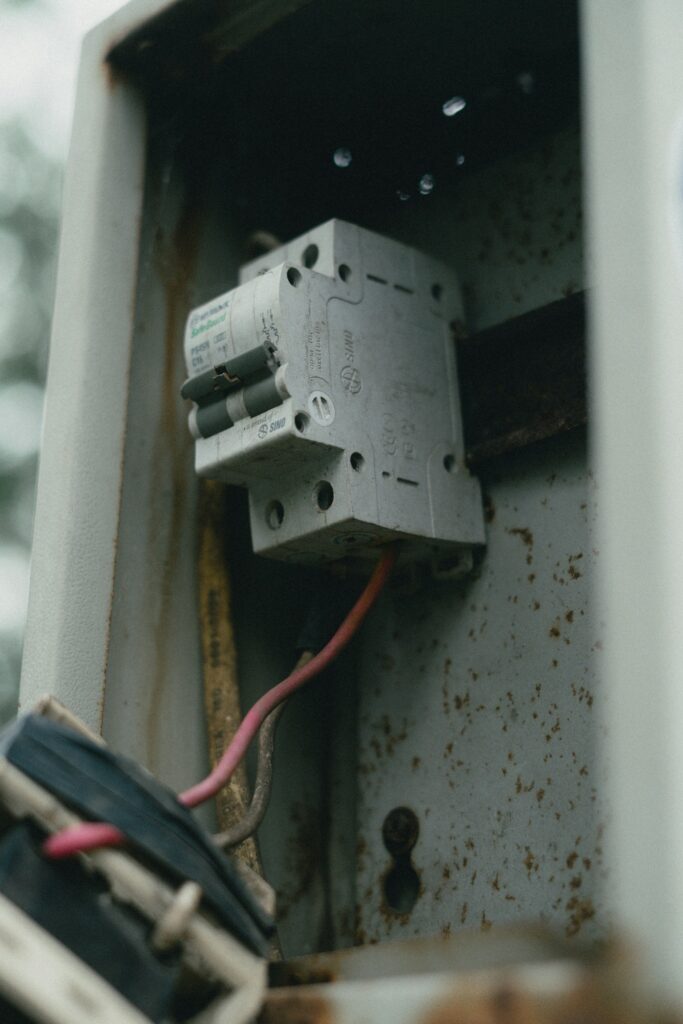
But don’t try to beat a breaker that trips repeatedly. It might be saving your house by preventing an overload, a faulty appliance, a short in the wiring, frayed wires, or other electrical problem. Resetting over and over can mask the warning instead of solving the cause.
It is very easy to safely handle these issues; one reset under normal circumstances should be sufficient, after which determine the source of the problem, and if abnormal behavior occurs, stop. If the breaker will not stay on, or there is evidence of damage, leave the circuit off, and have a qualified electrician examine it.
FAQs
1. Can I reset a tripped breaker myself?
Yes, a simple reset is almost always something that a homeowner is going to be allowed to do as long as there is no visible damage, or it’s not another electrical danger. First, turn off all appliances that draw from the affected circuit or simply unplug them, then pull the breaker to the furthest “Off” position, and pull it back to “On.”
2. Why does my breaker trip as soon as I turn it back on?
Re- tripping suggests that the electrical problem persists. This might be due to a short circuit, plugged equipment, loose wiring or even overload, a large electrical load has caused the circuit to shut down. Don’t continue to flip the breaker: you may want an expert electrician to diagnose the problem.
3. How many times can I reset a tripped breaker?
There is no safe rule that says a breaker should be reset a certain number of times. If it trips again after a proper reset, especially immediately, investigate the cause rather than repeatedly resetting it.
4. Should I replace a 15-amp breaker with a 20-amp breaker if it keeps tripping?
No. A higher-rated breaker should not be installed simply to prevent trips. The protective device must be appropriately matched to the electrical circuit. An incorrectly rated breaker can create a serious safety hazard.
5. Why does my breaker trip when I use one specific appliance?
Whether it is a faulty appliance that will not stop popping circuits, whether you have an appliance that always seems to draw much too much power. If your appliance keeps having these problems, do not let it trip the circuit continue doing so.
6. What does it mean if the breaker keeps tripping even with appliances unplugged?
That indicates the problem could be something other than an overworked appliance; maybe it’s faulty wiring, a short circuit, the breaker, or some other electrical malfunction. Leave the circuit off until one of us comes to inspect it.
7. Is a tripped breaker dangerous?
Although the trip itself is a mechanism to offer some security, the ailment that has caused the trip could pose real danger. Smelling burning odors, excessive smoke, buzzing sounds, scorch marks, a burnt object or component, extra warm equipment or constant trips are cause for more investigation.