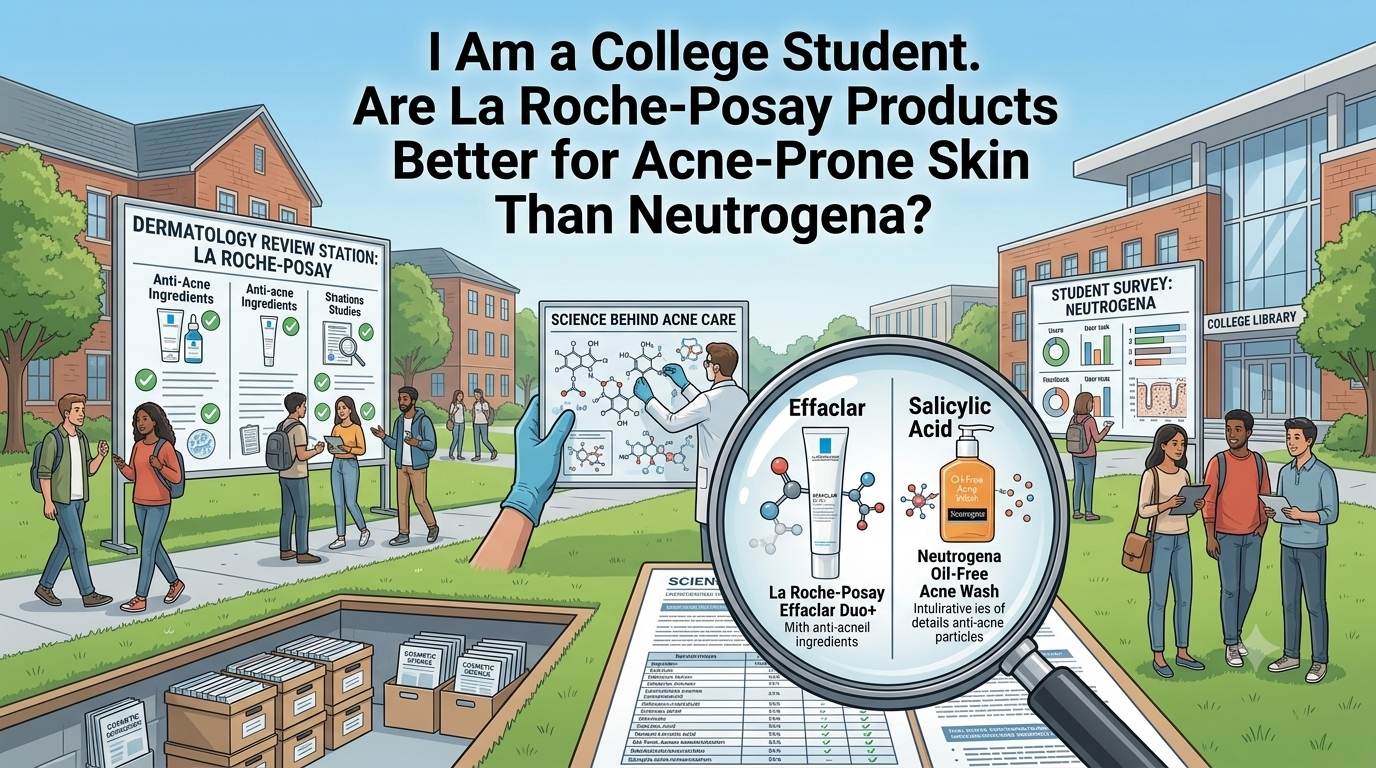
Acne in college is an entirely different beast than the breakouts of early adolescence. When you are balancing 8:00 AM lectures, late-night study sessions in the library, communal dorm bathroom plumbing, dining hall food, and fluctuating stress levels, your skin bears the brunt of your environment. For many undergraduates staring at the crowded skincare aisles of Target or CVS, two heavyweights dominate the debate: French pharmacy icon La Roche-Posay and American drugstore staple Neutrogena.
If you find yourself asking, “I am a college student. Are La Roche-Posay products better for acne-prone skin than Neutrogena?”, you are not alone. Navigating active ingredients like salicylic acid, micronized benzoyl peroxide, lipo-hydroxy acid (LHA), and niacinamide while managing a tight student budget requires more than marketing fluff. You need a clear, dermatologically sound breakdown of active ingredient delivery, skin barrier preservation, price-to-performance ratios, and realistic routine building.
1. The Core Comparison: Philosophy, Formulation, and Science
To address the main question, “I am a college student. Are La Roche-Posay products better for acne-prone skin than Neutrogena?”—it helps to understand how these two skincare giants approach acne treatment from fundamentally different formulation philosophies.
| Feature / Criteria | La Roche-Posay (Effaclar & Toleriane Lines) | Neutrogena (Stubborn Acne & Hydro Boost Lines) |
| Brand Origin & Philosophy | French dermo-cosmetic brand focused on sensitive, reactive skin barrier health alongside clinical actives. | Classic American drugstore pioneer focused on accessible, high-strength over-the-counter (OTC) active ingredients. |
| Key Active Ingredients | Lipo-Hydroxy Acid (LHA), Micronized Benzoyl Peroxide (5.5%), Salicylic Acid, Niacinamide, Zinc PCA. | Salicylic Acid (2%), Micronized Benzoyl Peroxide (2.5%–10%), Polyhydroxy Acid (PHA), Hyaluronic Acid. |
| Soothe & Barrier Technology | La Roche-Posay Prebiotic Thermal Spring Water, Ceramides, Neurosensine. | Hyaluronic Acid (Hydro Boost matrix), Botanical soothe complexes. |
| Fragrance & Sensitization | Mostly fragrance-free or ultra-low allergen formulations tailored for reactive skin. | Mix of scented classic lines (e.g., Orange Oil-Free Wash) and fragrance-free clinical ranges. |
| Average Price Point | Medium / Upper Drugstore ($15.99 – $38.00 USD). | Budget / Value Drugstore ($8.99 – $18.99 USD). |
| Best Suited For | Inflammatory, sensitive, or compromised barrier acne; long-term prevention. | Budget-conscious students needing rapid high-strength spot reduction or basic clearing. |
La Roche-Posay: The Barrier-First Approach
La Roche-Posay approaches acne through the lens of dermatology and skin barrier preservation. Its premier anti-acne line, Effaclar, does not rely solely on stripping away sebum or blasting bacteria with raw active percentages. Instead, it pairs keratolytic agents with anti-inflammatory compounds like Niacinamide (Vitamin B3), Zinc PCA, and La Roche-Posay Prebiotic Thermal Spring Water.
One of La Roche-Posay’s primary technological advantages is Lipo-Hydroxy Acid (LHA). LHA is a derivative of salicylic acid with a larger lipid structure, allowing it to penetrate skin cell by cell (micro-exfoliation) at a slower, far less irritating rate than standard beta-hydroxy acids. For a college student experiencing red, painful papules alongside dry patches from dorm heating or AC, this gentle micro-exfoliation treats breakouts without destroying the moisture barrier.
Neutrogena: Direct Active Delivery & Unbeatable Accessibility
Neutrogena built its legacy on high accessibility, immediate physical performance, and straight-to-the-point OTC active drugs. Lines like Neutrogena Stubborn Acne, Stubborn Marks, and the classic Oil-Free Acne Wash deliver maximum-strength or fast-acting concentrations of Salicylic Acid (up to 2%) and Benzoyl Peroxide (up to 10%).
Neutrogena prioritizes immediate active contact. When you need a deep-pore purge before midterm presentations or a fast-acting benzoyl peroxide gel to flatten an emerging cystic bump overnight, Neutrogena provides raw chemical power at a price point that leaves extra money in your wallet for groceries and textbooks. However, older classic formulas (like the traditional amber Oil-Free Acne Wash) rely on harsh surfactants like Sodium C14-16 Olefin Sulfonate, which can over-strip delicate facial skin if overused.
2. Why College Life Triggers Unique Breakouts
Before deciding if one brand is superior, you must understand why campus life creates the perfect storm for acne. When asking yourself, “I am a college student. Are La Roche-Posay products better for acne-prone skin than Neutrogena?”, your answer hinges on how your skin responds to specific lifestyle stressors.
┌────────────────────────────────────────────────────────────────────────┐
│ THE COLLEGE ACNE CASCADE PROCESS │
├────────────────────────────────────────────────────────────────────────┤
│ 1. STRESS & CORTISOL ──► Triggers excess sebum (oil) production │
│ 2. LATE NIGHTS & DIET ──► Impairs natural skin barrier repair overnight │
│ 3. DORM WATER QUALITY ──► Hard water minerals disrupt facial skin pH │
│ 4. OVER-WASHING ──► Strips lipid barrier ──► Rebound oiliness │
└────────────────────────────────────────────────────────────────────────┘
High Cortisol and Sebum Hyper-Production
Exam stress triggers the adrenal glands to pump out cortisol and androgenic hormones. These hormones stimulate your sebaceous glands to produce thicker, stickier sebum. When this heavy sebum mixes with dead skin cells inside the follicle, it forms a plug (comedone).
Dorm Water Hardness and Skin pH
Many campus dorms feature older plumbing infrastructure with high concentrations of dissolved minerals like calcium and magnesium (hard water). Hard water raises your skin’s natural surface pH from an ideal, slightly acidic 4.5–5.5 up to an alkaline 7.5 or 8.0. An alkaline surface disrupts your acid mantle, impairs skin barrier enzymes, and creates an optimal environment for Cutibacterium acnes (C. acnes) bacteria to proliferate.
Over-Exfoliation Traps
When students see new breakouts, their instinct is often to scrub their face harder with abrasive cleansers or high-strength benzoyl peroxide washes three times a day. This strips essential ceramides and lipids, leading to rebound hyper-seborrhea (where the skin produces even more oil to compensate for severe dehydration) and raw, burning skin.
3. Product-by-Product Head-to-Head Comparison
To evaluate whether La Roche-Posay outperforms Neutrogena for your specific routine, let’s compare their flagships across four essential skincare categories: Cleansers, Active Treatments, Hydrating Moisturizers, and Daily Sunscreens.
A. Cleanser Category: Effaclar Medicated Gel vs. Neutrogena Stubborn Texture / Oil-Free Acne Wash
┌─────────────────────────────────────────────────────────────────────────┐
│ ACNE CLEANSER COMPARISON │
├───────────────────────────┬─────────────────────────────────────────────┤
│ LA ROCHE-POSAY EFFACLAR │ NEUTROGENA STUBBORN TEXTURE CLEANSER │
│ MEDICATED GEL CLEANSER │ │
├───────────────────────────┼─────────────────────────────────────────────┤
│ • 2% Salicylic Acid │ • 1% Salicylic Acid + 2% Polyhydroxy Acid │
│ • Lipo-Hydroxy Acid (LHA) │ • Glycolic Acid (AHA) Complex │
│ • Zinc PCA (Oil control) │ • Smooths rough skin texture fast │
│ • Soap-free, balanced pH │ • High exfoliation power; can dry skin │
└───────────────────────────┴─────────────────────────────────────────────┘
When evaluating cleansers as someone thinking, “I am a college student. Are La Roche-Posay products better for acne-prone skin than Neutrogena?”, pay close attention to how your face feels 10 minutes after washing and consider acne-prone skin care needs.
- La Roche-Posay Effaclar Medicated Gel Cleanser ($17.99 for 6.7 oz): Formulated with 2% Salicylic Acid and LHA, this cleanser unclogs pores while maintaining a balanced skin pH. Zinc PCA helps control surface shine while keeping the skin comfortable and soft.
It excels if you wash your face twice daily in a dry dorm room.
- Neutrogena Stubborn Texture Daily Cleanser ($12.99 for 6.3 oz): Neutrogena’s modern update pairs 1% Salicylic Acid with 2% Polyhydroxy Acid (PHA) and Glycolic Acid (AHA). It works effectively to improve bumpy texture, reduce the appearance of closed comedones, and smooth rough skin.
- However, using this twice daily alongside other leave-on treatments can cause flaking in sensitive individuals.
Category Winner: La Roche-Posay Effaclar for overall barrier safety; Neutrogena Stubborn Texture for fast chemical exfoliation on non-sensitive, oily skin types.
B. Treatment Category: Effaclar Duo Dual Action vs. Neutrogena Stubborn Acne AM Treatment
Leave-on treatments form the operational core of any acne-fighting regimen. Both brands utilize Benzoyl Peroxide (BPO), the gold-standard OTC antibacterial agent that kills C. acnes without risking bacterial resistance.
┌─────────────────────────────────────────────────────────────────────────┐
│ BENZOYL PEROXIDE DELIVERY │
├────────────────────────────────────────┬────────────────────────────────┤
│ LA ROCHE-POSAY EFFACLAR DUO │ NEUTROGENA STUBBORN ACNE AM │
├────────────────────────────────────────┼────────────────────────────────┤
│ • 5.5% Micronized Benzoyl Peroxide │ • 2.5% Micronized Benzoyl │
│ • Lipo-Hydroxy Acid (LHA) │ Peroxide │
│ • Penetrates deep into narrow pores │ • Micro-fine BPO gel matrix │
│ • Includes silica for oil absorption │ • Lightweight, fast drying │
│ • Exceptional for inflammatory papules │ • Highly affordable spot care │
└────────────────────────────────────────┴────────────────────────────────┘
- La Roche-Posay Effaclar Duo Dual Action Acne Treatment ($22.99 for 0.7 oz): Combines 5.5% micronized benzoyl peroxide with LHA. Because the BPO particles are milled down to a micro-size, they penetrate deep into hair follicles with significantly less surface irritation than traditional coarse BPO creams. It acts simultaneously as a targeted spot treatment and a full-face lotion for persistent breakouts.
- Neutrogena Stubborn Acne AM Treatment ($13.99 for 2.0 oz): Utilizes 2.5% micronized benzoyl peroxide. Clinical studies demonstrate that 2.5% BPO is just as effective at eradicating C. acnes bacteria as 10% formulas, but with a fraction of the dryness, redness, and peeling.
If you are pondering, “I am a college student. Are La Roche-Posay products better for acne-prone skin than Neutrogena?”, this specific matchup reveals a value paradox. While La Roche-Posay’s formulation is elegant and includes LHA, Neutrogena’s Stubborn Acne AM Treatment gives you nearly triple the volume of 2.5% micronized BPO for almost half the price per ounce.
Category Winner: Neutrogena Stubborn Acne AM wins on price-per-ounce efficiency and low-irritation 2.5% BPO density; La Roche-Posay Effaclar Duo wins if you also require micro-exfoliation from LHA for stubborn blackheads.
C. Moisturizer Category: Toleriane Double Repair / Effaclar Mat vs. Hydro Boost Water Gel
Acne-prone skin requires hydration. Depriving oily or acne-prone skin of moisturizer causes your skin to overcompensate by secreting excess, low-quality sebum.
┌─────────────────────────────────────────────────────────────────────────┐
│ MOISTURIZER FORMULATION │
├───────────────────────────────────────┬─────────────────────────────────┤
│ LA ROCHE-POSAY TOLERIANE DOUBLE REPAIR│ NEUTROGENA HYDRO BOOST GEL-CREAM│
├───────────────────────────────────────┼─────────────────────────────────┤
│ • Ceramides-3 + Niacinamide │ • Hyaluronic Acid Matrix │
│ • Prebiotic Thermal Water │ • Polyglutamic / Glycerin hydration│
│ • Restores compromised barrier lipids │ • Ultra-lightweight gel texture │
│ • Prevents retinoid/BPO irritation │ • Leaves zero heavy residue │
└───────────────────────────────────────┴─────────────────────────────────┘
- La Roche-Posay Toleriane Double Repair Facial Moisturizer ($23.99 for 2.5 oz): A holy grail for barrier repair. Packed with Ceramide-3, Niacinamide, Glycerin, and thermal water, it restores damaged skin barriers in as little as one hour. If you are using prescription retinoids (like Tretinoin or Differin/Adapalene) alongside your acne routine, this moisturizer keeps peeling and burning at bay.
- Neutrogena Hydro Boost Water Gel / Gel-Cream ($19.99 for 1.7 oz): An iconic oil-free hyaluronic acid gel. It absorbs instantly, making it perfect for humid summer days or under heavy makeup. However, in dry, heated dorm rooms during winter, hyaluronic acid can pull moisture out of deeper skin layers if not sealed with an emollient lipid layer.
When asking, “I am a college student. Are La Roche-Posay products better for acne-prone skin than Neutrogena?”, the moisturizer decision depends on your current treatment intensity. If your skin is peeling from acne treatments, La Roche-Posay’s ceramide-rich formula provides far better structural recovery than Neutrogena Hydro Boost.
Category Winner: La Roche-Posay Toleriane Double Repair hands down for barrier health, active-induced dryness, and overall component richness.

D. Sunscreen Category: Anthelios Clear Skin SPF 60 vs. Neutrogena Ultra Sheer / Hydro Boost SPF
Sunscreen is non-negotiable for acne-prone skin, particularly when maintaining daily sun protection as part of a consistent skincare routine. UV exposure hardens sebum, darkens post-acne marks (post-inflammatory hyperpigmentation or PIH), and breaks down active ingredients.
- La Roche-Posay Anthelios Clear Skin Dry Touch Sunscreen SPF 60 ($22.99 for 1.7 oz): Formulated with Perlite and Silica to absorb excess oil throughout the day. It stays matte even in hot, muggy conditions and will not clog pores or cause breakout flares.
- Neutrogena Ultra Sheer Dry-Touch SPF 50 ($11.99 for 3.0 oz): A classic budget option that offers solid protection. However, it can sting sensitive eyes, leave a slight white cast on deeper skin tones, and sometimes pilling under morning makeup or moisturizer.
Category Winner: La Roche-Posay Anthelios for superior texture, matte finish, and zero eye sting.
4. The Budget Realities for College Students
Cost is often the ultimate deciding factor when living on a student budget, especially when comparing useful technology resources and everyday digital services. When evaluating “I am a college student. Are La Roche-Posay products better for acne-prone skin than Neutrogena?”, you must look closely at price per ounce and product longevity.
┌─────────────────────────────────────────────────────────────────────────┐
│ STUDENT ANNUAL BUDGET ESTIMATE │
├───────────────────────────────────┬───────────────────┬─────────────────┤
│ COST CATEGORY │ LA ROCHE-POSAY │ NEUTROGENA │
│ │ FULL ROUTINE │ FULL ROUTINE │
├───────────────────────────────────┼───────────────────┼─────────────────┤
│ Cleanser (Replenished 3x/year) │ ~$54.00 │ ~$27.00 │
│ Active Treatment (3x/year) │ ~$69.00 │ ~$42.00 │
│ Daily Moisturizer (4x/year) │ ~$96.00 │ ~$60.00 │
│ Daily Sunscreen (4x/year) │ ~$92.00 │ ~$48.00 │
├───────────────────────────────────┼───────────────────┼─────────────────┤
│ ESTIMATED ANNUAL INVESTMENT │ ~$311.00 USD │ ~$177.00 USD │
└───────────────────────────────────┴───────────────────┴─────────────────┘
Spending over $300 a year on skincare can strain a student budget. If your finances are tight, buying an entire line of La Roche-Posay products might force you to skip crucial steps (like daily sunscreen or replenishing your moisturizer).
However, if you buy cheap products that inflame your skin and force you to visit a dermatologist or buy corrective serums later, you haven’t actually saved money. This brings us to the strategic value of a hybrid routine.
5. The Hybrid Strategy: The Best of Both Worlds
You do not need to pledge total allegiance to a single brand. When answering “I am a college student. Are La Roche-Posay products better for acne-prone skin than Neutrogena?”, smart skincare enthusiasts pick the highest-performing products from both catalogs to maximize performance while minimizing expense.
┌────────────────────────────────────────────────────────────────────────┐
│ THE HIGH-PERFORMANCE HYBRID ROUTINE │
├────────────────────────────────────────────────────────────────────────┤
│ MORNING (AM): │
│ 1. Wash: Neutrogena Hydro Boost Gentle Cleanser ($9.99) │
│ 2. Treat: Neutrogena Stubborn Acne AM 2.5% BPO ($13.99) │
│ 3. Protect: La Roche-Posay Anthelios Clear Skin SPF 60 ($22.99) │
│ │
│ EVENING (PM): │
│ 1. Wash: La Roche-Posay Effaclar Medicated Gel Cleanser ($17.99) │
│ 2. Restore: La Roche-Posay Toleriane Double Repair Moisturizer ($23.99)│
└────────────────────────────────────────────────────────────────────────┘
Why This Hybrid Setup Works
- Saves Money Where It Counts: Using Neutrogena’s 2.5% BPO treatment gives you high-capacity active antibacterial power without paying La Roche-Posay’s premium markup for benzoyl peroxide.
- Protects Your Barrier Where It Counts: Using La Roche-Posay for your evening moisturizer and morning sunscreen ensures your skin receives ceramides, niacinamide, thermal spring water, and advanced UV filters where leave-on protection matters most.
- Prevents Over-Irritation: Alternating between a gentle morning wash and an active evening cleanser prevents the barrier destruction common in single-brand, high-intensity regimens.
6. Step-by-Step Practical Routine Implementation
If you are ready to construct a routine, here is how to execute your daily care step by step based on your specific acne profile.
1.Step 1: Gentle AM Cleansing & Environmental Prep:Morning Preparation.
Wash your face with lukewarm water or a gentle non-stripping cleanser. Avoid scrubbing vigorously with dorm towels; pat dry gently with a clean paper towel or microfiber cloth to prevent transferring bacteria from shared laundry bins.
2.Step 2: Apply Targeted Leave-On Treatments:Targeted Active Application.
Apply a thin layer of your chosen treatment (such as Neutrogena Stubborn Acne 2.5% BPO or La Roche-Posay Effaclar Duo) across acne-prone zones. Allow the product to absorb completely for 2 minutes before moving to hydration to avoid pilling.
3.Step 3: Hydrate & Rebuild the Lipid Barrier:Barrier Lock-In.
Dispense a nickel-sized amount of barrier-repair moisturizer (such as La Roche-Posay Toleriane Double Repair) containing ceramides and niacinamide. Smooth gently across your face and neck to seal in hydration and prevent active-induced flaking.
4.Step 4: Broad-Spectrum Sun Protection:Daytime UV Defense.
Apply a generous two-finger length of oil-free SPF (such as La Roche-Posay Anthelios Clear Skin) as your final morning step. Reapply before sitting near sunny campus windows or walking between afternoon classes.
5.Step 5: PM Deep Cleansing & Recovery:Nighttime Reset.
At night, use a active salicylic acid cleanser (like La Roche-Posay Effaclar Medicated Gel) to break down oil, sweat, and sunscreen accumulated throughout the day. Follow immediately with your night moisturizer to support overnight cellular repair.
7. Dermatological Troubleshooting for Campus Life
When you ask yourself, “I am a college student. Are La Roche-Posay products better for acne-prone skin than Neutrogena?”, troubleshooting early skin responses ensures you don’t abandon a working routine prematurely.
┌─────────────────────────────────────────────────────────────────────────┐
│ ACNE PURGING VS. PRODUCT REACTION │
├───────────────────────────┬─────────────────────────────────────────────┤
│ SKIN PURGING │ ALLERGIC / BARRIER REACTION │
├───────────────────────────┼─────────────────────────────────────────────┤
│ • Occurs in typical zones │ • Appears in new, unusual areas │
│ • Small, fast-healing │ • Redness, burning, itchiness, hives │
│ whiteheads │ │
│ • Caused by accelerated │ • Caused by contact dermatitis or severe │
│ cell turnover │ barrier disruption │
│ • Resolves in 4–6 weeks │ • Does NOT resolve; worsens with use │
└───────────────────────────┴─────────────────────────────────────────────┘
Dealing with the 4-Week “Purge”
When introducing active ingredients like Salicylic Acid, LHA, or Benzoyl Peroxide, micro-comedones hidden deep beneath the surface mature rapidly into visible pimples. This is called purging. Stick with your routine for at least 4 to 6 weeks before deciding whether a product works.
Managing “Dorm Face” (Hard Water Buildup)
If hard water in your residence hall leaves your skin feeling tight and irritated after cleansing:
- Keep a bottle of La Roche-Posay Thermal Spring Water Spray or a hydrating toner at your desk.
- Spritz your face immediately after drying to dilute residual tap minerals and restore your skin’s natural acidic pH.
8. Final Verdict: Which Brand Should You Choose?
So, as someone asking, “I am a college student. Are La Roche-Posay products better for acne-prone skin than Neutrogena?”, here is your clear, actionable conclusion.
La Roche-Posay is better for you if:
- Your skin becomes red and irritated easily, especially after using traditional over-the-counter acne treatments.
- You are currently using prescription topical retinoids (such as Tretinoin, Adapalene/Differin, or Epiduo) and need barrier-restoring cleansers and moisturizers that won’t cause stinging.
- You struggle with persistent post-acne dark marks and micro-clogged pores that require gentle daily micro-exfoliation from LHA and Niacinamide.
- Your budget allows for spending $20–$25 per core staple product.
Neutrogena is better for you if:
- You have thick, extremely oily, non-sensitive skin that requires strong, direct chemical exfoliation.
- You need fast, budget-friendly access to high-potency 2.5% micronized Benzoyl Peroxide spot treatments without paying premium prices.
- You are on a strict student budget and need a complete, functional 3-step acne setup for under $35 total.
┌────────────────────────────────────────────────────────────────────────┐
│ FINAL DECISION MATRIX │
├────────────────────────────────────────────────────────────────────────┤
│ IF YOUR PRIMARY CONCERN IS: ──► CHOOSE THIS SOLUTION: │
│ • Sensitive Skin / Redness ──► La Roche-Posay Effaclar Line │
│ • Strict Budget / High Oil ──► Neutrogena Stubborn Line │
│ • Best Overall Results & Value ──► The Hybrid Strategy (Section 5) │
└────────────────────────────────────────────────────────────────────────┘
Ultimately, while Neutrogena offers outstanding individual active treatments at entry-level prices, La Roche-Posay offers a superior overall ecosystem for managing acne-prone skin long-term without compromising your skin barrier. By helping preserve the skin’s natural barrier while addressing acne-causing bacteria, La Roche-Posay can help avoid the cycle of excessive dryness and recurring breakouts, making it a worthwhile targeted investment for college students.
Direct Answer Summary
If you are wondering, “I am a college student. Are La Roche-Posay products better for acne-prone skin than Neutrogena?”, the short answer is yes, La Roche-Posay products are generally better for long-term acne management and skin barrier integrity, but Neutrogena remains a strong contender for budget-restricted students needing simple, high-potency active spot treatments. Combining La Roche-Posay’s barrier-focused moisturizers and sunscreens with Neutrogena’s budget-friendly micronized benzoyl peroxide treatments gives you the absolute best performance for your money.