
Few household predicaments disrupt a social gathering or a quiet dinner quite as instantly as a stubborn, crumbling, or pushed-in wine stopper. When you stand in your kitchen wondering how to get a cork out of a wine bottle without specialized equipment or after a standard opener has shredded the material, the situation can feel immensely frustrating. You are left dealing with a fragile glass vessel, a potential mess, and the risk of ruining an expensive beverage with floating woody debris.
Understanding the physics of bottle seals and the structural properties of natural versus synthetic stoppers is the key to solving this dilemma safely. Cork is a unique, porous cellular material that expands to create a tight friction fit against the smooth interior glass neck. Over time, environmental factors like humidity, temperature fluctuations, and storage orientation alter this friction dynamic, turning a routine opening into a delicate extraction challenge.
Whether you are dealing with a vintage bottle whose closure has softened with age, a stubborn synthetic plug that refuses to yield, or a stopper that has accidentally slipped entirely inside the bottle neck, proven mechanical solutions exist. This consultant-style guide breaks down the underlying causes of closure failures, evaluates household leverage methods, and outlines safe, step-by-step extraction protocols so you can enjoy your wine without hassle.
The Chemistry and Physics Behind Stubborn Wine Closures
To master how to get a cork out of a wine bottle when standard methods fail, it helps to analyze why the closure became stuck or fragile in the first place. Natural cork is harvested from the outer bark of the cork oak tree, composed of millions of microscopic, air-filled cells that make it remarkably compressible and resilient. When compressed into a bottle neck, it exerts constant outward pressure against the glass to form an airtight barrier that protects the aging liquid from rapid oxidation.
However, if a wine bottle is stored upright for extended periods, the interior end of the stopper dries out, losing its elasticity and shrinking slightly, or becoming brittle and crumbly. Conversely, excessive humidity or prolonged contact with faulty wine can cause natural material to degrade, soften, or adhere tightly to the inner glass walls. Synthetic stoppers made from polyethylene plastic do not dry out, but they possess exceptionally high friction coefficients, requiring significant linear pulling force to extract.
When you insert a traditional corkscrew, the spiral worm must grip the center core of the material firmly. If the worm is driven in at an angle or if the material has dry rotted, applying upward force simply shears the center out, leaving a hollowed-out ring attached to the glass. Recognizing these physical conditions determines whether you should apply upward mechanical leverage, rotational friction, or pressure-assisted extraction.
Standard Extraction Protocols Using Professional Tools
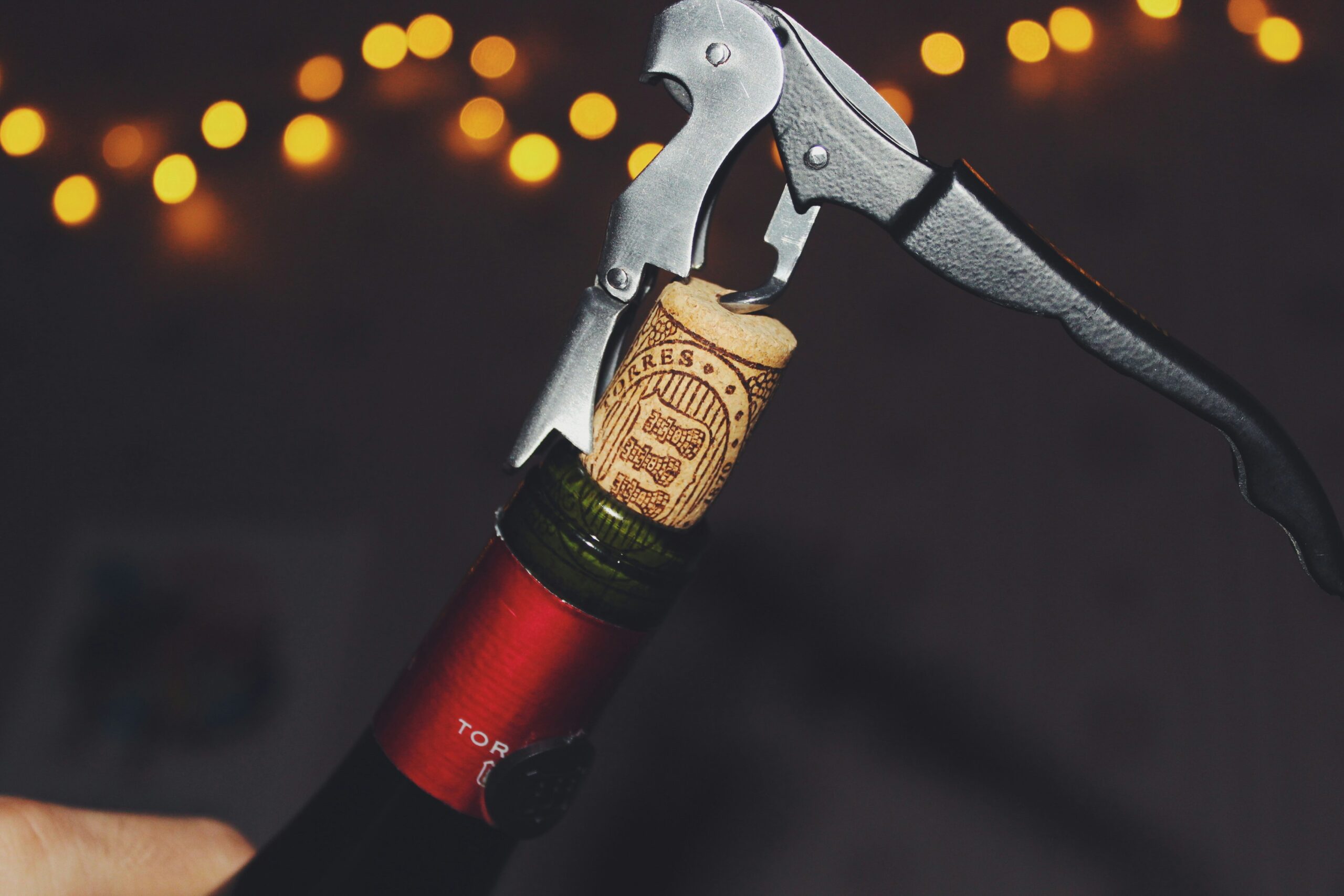
Before turning to improvised home methods, evaluating how to get a cork out of a wine bottle using proper wine tools is always the safest starting point. The classic waiter’s corkscrew, often referred to as a sommelier knife, remains the industry gold standard because it uses a two-step hinged fulcrum to exert straight, upward vertical leverage, making it a reliable choice for safe wine bottle opening methods.
When operating a waiter’s corkscrew, position the pointed tip of the spiral worm slightly off-center so that as you rotate the tool, the axis of the screw aligns directly down the middle of the stopper. Turn the handle steadily until exactly one coil of the spiral remains visible above the rim. Driving the worm completely through the bottom can shower wood fragments into the liquid, while leaving too many coils exposed risks snapping the upper portion of the material under tension.
Engage the first notch of the hinged lever against the lip of the bottle mouth, hold the neck securely with your non-dominant hand, and lift the handle straight upward. Transition smoothly to the second notch as the stopper rises. This controlled, two-stage linear traction minimizes side-to-side shearing forces, extracting even tight plugs smoothly without tearing the material or chipping the delicate glass rim.
How to Handle a Broken or Crumbling Cork in the Bottle Neck
One of the most stressful scenarios occurs when the top half of the stopper snaps off, leaving the remaining lower half firmly wedged deep inside the bottle neck. When figuring out how to get a cork out of a wine bottle in this fragile state, brute force will only push the remaining plug down into the liquid.
First, wipe away any loose crumbly debris from the exposed top surface using a clean paper towel. Tilt the bottle at a gentle forty-five-degree angle. Reinsert the spiral worm of your corkscrew into the remaining solid material at an angle, directing the point toward the inner glass wall where the material is strongest, rather than down the weakened center channel.
Thread the worm carefully until it bites securely into the lower section. Apply slow, deliberate upward pressure while rotating the bottle slightly to break the adhesive bond between the outer edge of the stopper and the glass. If you feel the material giving way or crumbling further, pause immediately and consider transitioning to a two-pronged Ah-So opener, which slides thin metal blades down the outer sides of the plug to grip it from the exterior boundaries without drilling through the core.
Improvised Household Solutions Using the Screw, Washer, and Claw Hammer Technique
If you find yourself without a wine opener entirely, learning how to get a cork out of a wine bottle using common toolbox items is a highly effective, mechanically sound alternative. The most reliable DIY method utilizes a wide-threaded metal wood screw, a flat washer, and a standard claw hammer or pair of pliers.
Select a clean metal screw at least two to three inches in length with coarse, aggressive threads. Avoid thin drywall screws, which can snap easily under lateral tension. Manually press the point of the screw into the center of the stopper and use a screwdriver to drive it downward in a smooth, clockwise motion until roughly half an inch of the screw head remains exposed above the rim.
Slide the claw of a hammer or the jaws of a pair of pliers under the head of the screw, using a folded dish towel placed over the glass rim as a protective fulcrum base. Apply steady, downward pressure on the handle of the hammer to leverage the screw—and the attached stopper—straight upward. This technique replicates the mechanical advantage of a lever arm, pulling the plug out cleanly along its vertical axis.
Utilizing Controlled Heat Expansion and Pressure Dynamics
For situations where mechanical tools cannot grip the material, leveraging basic thermodynamics offers a fascinating approach for how to get a cork out of a wine bottle. Inside every sealed wine bottle, a small air pocket called the ullage exists between the bottom of the stopper and the top surface of the liquid. When heated, the gas molecules within this air space expand, creating positive internal pressure that pushes the stopper outward.

To execute this method safely, fill a deep bowl or pot with warm tap water—never boiling water, as extreme temperature shocks can cause thick glass to fracture unexpectedly. Submerge the lower neck and shoulder area of the bottle in the warm bath for several minutes while holding the base securely.
As the trapped air pocket absorbs thermal energy, it expands continuously, exerting uniform upward pressure across the entire bottom surface of the stopper. You will observe the plug slowly creeping upward out of the neck. Once the top portion clears the glass rim by half an inch, carefully grasp it with your fingers or a towel and pull it out the rest of the way. Never apply direct open flames or boiling water to a sealed glass container.
What to Do When the Cork is Pushed Entirely Inside the Bottle
Sometimes, despite your best efforts, the stopper slips past the narrow neck pinch and falls completely into the wine itself. Knowing how to get a cork out of a wine bottle after the stopper is floating inside shifts the goal from preserving the seal to filtering the liquid and retrieving the object safely.
If the stopper is made of natural material, it will float to the top of the liquid. The immediate priority is to decant the wine slowly through a fine-mesh stainless steel strainer or a piece of unbleached cheesecloth into a clean glass pitcher or decanter while following wine serving and decanting tips. This step traps any tiny floating wood shavings or dust particles, ensuring the taste and clarity of the wine remain unaffected.
To retrieve the floating plug from the empty bottle, you can use a simple length of clean household string or ribbon. Tie a thick, bulky knot at the end of the string and drop the knotted end down into the bottle. Invert the bottle so the floating plug falls into the narrow neck, resting directly against the inside opening. Pull the string upward so the knot catches under the bottom base of the stopper, wedging it securely against the glass walls as you pull it out through the mouth.
Comparing Extraction Methods Across Different Scenarios
Choosing the right approach for how to get a cork out of a wine bottle depends entirely on the condition of the closure and the tools you have available.
The Waiter’s Corkscrew is best for intact natural or synthetic closures when standard tools are present. It offers high leverage, excellent control, and a minimal risk of breakage.
The Two-Pronged Ah-So Opener excels with old, fragile, or crumbling natural material in vintage wines. It grips the stopper externally without piercing the delicate center core.
The Screw and Claw Hammer Method is ideal for solid stoppers when no corkscrew is available. It relies on standard household tools to provide strong vertical pulling force.
The Warm Water Expansion Method works well for intact stoppers stuck due to high friction when no tools exist. It uses air expansion to push the plug out safely without physical contact.
The Decanting and String Retrieval Method is required when the stopper is pushed entirely inside the bottle. It prioritizes straining the wine first and retrieving the plug from the empty vessel second.
Common Mistakes to Avoid During Emergency Uncorking
When people search for how to get a cork out of a wine bottle under pressure, they often encounter dangerous or ineffective viral hacks that should be avoided entirely. Understanding what not to do is just as critical as knowing proper extraction procedures.
Avoid hitting the bottom of the glass bottle against a wall or using a shoe to knock the base. While this viral trick relies on hydraulic pressure forces, it places immense structural stress on the glass base, frequently causing the bottle to shatter in your hands and causing severe cuts or ruinous spills.
Never use sharp knives, pocket blades, or key tips to dig out a stuck stopper. Prying with thin metal blades applies uneven lateral pressure against the narrow glass rim, which can easily chip sharp microscopic glass shards directly into your wine or slip and cause personal injury.
Refrain from using high-powered air inflation pumps or bicycle tires attached to hollow needles unless they are specifically designed medical or wine tools with safety shields. Over-pressurizing a glass container can turn a standard bottle into a dangerous pressure risk if the glass contains hidden manufacturing flaws or micro-cracks.
Preventive Measures for Storage and Handling
Once you have successfully mastered how to get a cork out of a wine bottle during a tricky situation, implementing proper storage practices will prevent similar problems from happening in the future.
Store natural cork-sealed wine bottles horizontally on a dedicated wine rack or angled slightly downward, following proper wine storage techniques to help preserve the closure and beverage. Keeping the liquid in continuous contact with the interior face of the stopper maintains essential moisture levels, preventing the material from shrinking, drying out, or becoming brittle over long periods.
Maintain a stable storage environment with relative humidity levels between fifty and seventy percent, kept away from direct sunlight and rapid temperature swings. High humidity keeps natural seals supple, while steady temperatures prevent expansion and contraction cycles that compromise the airtight seal between the glass and the closure.
Frequently Asked Questions
1. Is wine safe to drink if pieces of cork fall into the bottle?
Yes, natural material is non-toxic and will not ruin or poison the wine. However, floating particles alter the texture, so you should pour the wine through a fine mesh strainer or coffee filter into a decanter before serving.
2. Why do synthetic stoppers get stuck more easily than natural ones?
Synthetic plugs are made from dense polyethylene plastic that does not compress or absorb moisture like natural wood bark. Their high surface friction creates an extremely tight seal against smooth glass, requiring greater pulling force.
3. Can I use a shoe to knock a stuck cork out of a bottle?
This method is not recommended. Striking the base of a glass bottle against a hard surface creates extreme hydraulic shock that can shatter the glass, posing a severe injury risk.
4. How do I get a broken cork out without a corkscrew?
Insert a long, coarse metal screw into the remaining material with a screwdriver, then use the claw end of a hammer balanced over a protective cloth to leverage the screw and plug upward.
5. What tool is best for opening very old or vintage bottles of wine?
A two-pronged Ah-So opener or a Durand tool is best for vintage bottles. These tools slide thin metal blades down between the glass and the stopper, hugging the sides without crumbling the delicate center core.
6. Will heating the neck of a wine bottle damage the wine inside?
Gently warming the upper neck area in warm tap water for a few minutes will not alter the flavor of the wine, as the heat affects only the air space at the top without significantly raising the temperature of the liquid below.