When driving along highways in California, Florida, Texas, or New York, motorists frequently spot high-end exotic supercars, luxury motorhomes, and custom classic vehicles bearing license plates from the Treasure State. Seeing a $400,000 Ferrari or a $1 million Prevost RV with Montana tags parked in a suburban driveway leads many observers to ask: why do people register cars in Montana when they clearly reside thousands of miles away?
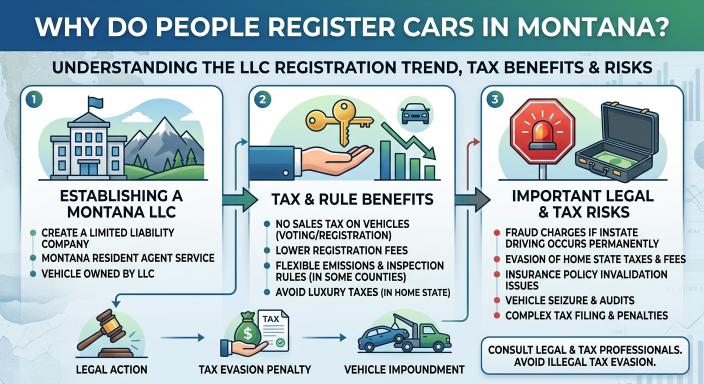
The answer lies at the intersection of state tax law, corporate entity structuring, vehicle registration regulations, and asset protection. Montana stands out for its combination of tax and vehicle policies, such as the absence of a general state sales tax, no mandatory statewide smog or safety inspections, and comparatively low registration fees, and flexible corporate formation statutes. These factors allow out-of-state residents to establish a Montana Limited Liability Company (LLC) to legally title and register vehicles without setting foot in the state. Readers exploring vehicle registration resources can also find more useful information on Tech Galaxcy.
However, while this tax strategy offers massive upfront savings, it has also sparked aggressive crackdowns by tax authorities across the country. This comprehensive guide explores every dimension of the Montana vehicle registration phenomenon—from its financial mechanics and legal framework to state enforcement actions, insurance risks, and alternative tax strategies.
1. The Core Financial Incentive: 0% State Sales Tax
To understand why do people register cars in Montana, one must first examine the massive tax savings associated with luxury and high-value vehicle purchases.
┌─────────────────────────────────────────────────────────────────────────────┐
│ SALES TAX COMPARISON: $300,000 SUPERCAR │
├──────────────────────────────┬───────────────────┬──────────────────────────┤
│ STATE / JURISDICTION │ COMBINED TAX RATE │ INITIAL SALES TAX DUE │
├──────────────────────────────┼───────────────────┼──────────────────────────┤
│ California (Los Angeles Co.) │ 9.50% │ $28,500 │
│ Washington (Seattle) │ 10.35% │ $31,050 │
│ New York (NYC) │ 8.875% │ $26,625 │
│ Illinois (Cook Co.) │ 10.25% │ $30,750 │
│ Texas (Average Local) │ 6.25% – 8.25% │ $18,750 – $24,750 │
│ Montana (Statewide) │ 0.00% │ $0 │
└──────────────────────────────┴───────────────────┴──────────────────────────┘
Montana is one of only five U.S. states without a general state sales tax, (alongside Delaware, New Hampshire, Oregon, and Alaska, though Alaska allows local sales taxes).
In most American jurisdictions, purchasing a vehicle triggers a state and local sales or use tax ranging from 4% to over 10% of the total purchase price.
For an everyday commuter vehicle costing $25,000, a 7% sales tax equals $1,750—a significant sum, but often accepted as a standard cost of vehicle ownership. However, for buyers operating in high-end automotive markets, sales tax calculations quickly scale into life-changing sums:
- A $250,000 Porsche 911 GT3 RS registered in a 9% tax district incurs $22,500 in upfront sales tax.
- A $600,000 McLaren Senna registered in a 10% tax district incurs $60,000 in sales tax.
- A $1,200,000 Class A Custom Motorhome registered in an 8.5% tax district incurs $102,000 in sales tax.
By creating a Montana LLC to purchase and hold title to the vehicle, out-of-state buyers can complete the transaction without paying a single dollar in state sales tax at the point of sale or registration. On high-ticket assets, this single tax benefit offsets the corporate setup and annual maintenance costs many times over.
2. How the “Montana Loophole” Works: The Legal Entity Mechanism
When exploring why do people register cars in Montana, a common misconception is that the car owner must relocate or establish primary residential residency in the Treasure State. In reality, the entire framework relies on corporate law rather than personal residency laws.
┌──────────────────────────────────────────────────────────────────────────┐
│ THE MONTANA LLC REGISTRATION STRUCTURE │
├──────────────────────────────────────────────────────────────────────────┤
│ │
│ [Out-of-State Buyer] ──► Forms Montana LLC via Registered Agent │
│ │ │
│ ▼ │
│ [Montana LLC] ──► Holds Legal Title & Registration to Vehicle │
│ │ │
│ ▼ │
│ [Vehicle Transaction] ──► Zero Sales Tax Applied Under Montana Law │
│ │
└──────────────────────────────────────────────────────────────────────────┘
The Corporate Residency Principle
Under United States corporate law, a Limited Liability Company (LLC) is recognized as a distinct legal “person” separate from its individual owners or members. A Montana LLC formed under the Montana Secretary of State is a resident entity of Montana, regardless of where its managing members reside physically.
Registered Agents and Physical Presence
Montana law does not require LLC owners to live in Montana, maintain a physical office, or conduct active operational business within the state. Instead, state law requires only that the LLC maintain a Registered Agent—a designated individual or commercial entity with a physical address in Montana authorized to receive official government correspondence and legal service of process.
Specialized registered agent services handle the entire setup:
- They file the Articles of Organization with the Secretary of State on behalf of the buyer.
- They provide a physical Montana mailing address for entity documentation.
- They submit title applications, Manufacturer’s Statements of Origin (MSO), and registration paperwork to the Montana Department of Justice Motor Vehicle Division (MVD).
- They receive the official Montana vehicle title, registration cards, and metal license plates, forwarding them directly to the owner’s home state via secure courier.
Because the vehicle’s legal owner is the Montana LLC—not the out-of-state individual—the transaction falls under Montana’s tax-free jurisdiction.
3. Exemption from Vehicle Inspections and Emissions Testing
Beyond zero sales tax, another major reason why do people register cars in Montana involves the state’s relaxed regulatory and testing environment.
No Mandatory Safety or Smog Testing
Many populous states enforce rigorous annual or biennial vehicle inspections. For instance, California enforces strict California Air Resources Board (CARB) emissions standards and mandatory smog checks. States like Pennsylvania, Texas, Virginia, and New York require annual mechanical safety inspections checking everything from window tint and exhaust volume to suspension height and brake wear.
Montana does not conduct state-level emissions testing or periodic safety inspections for passenger vehicles. This regulatory absence provides distinct advantages for several automotive niches:
┌──────────────────────────────────────────────────────────────────────────┐
│ REGULATORY AND INSPECTION COMPARISON │
├─────────────────────────┬────────────────────────┬───────────────────────┤
│ VEHICLE CATEGORY │ STRICT STATE REGIMES │ MONTANA REGISTRATION │
├─────────────────────────┼────────────────────────┼───────────────────────┤
│ Track / Tuned Vehicles │ Failed smog / exhaust │ No emissions check │
│ Imported Vintage Cars │ Federalization hassles │ Streamlined titling │
│ Custom Hot Rods / Kits │ Structural inspection │ Title via MSO/VIN │
│ European Grey Market │ CARB modification requirements │ Exempt from state testing │
└─────────────────────────┴────────────────────────┴───────────────────────┘
- Modified and Tuned Performance Vehicles: Owners of high-performance aftermarket sports cars that have undergone ECU tuning, catalytic converter deletes, or exhaust modifications often face immediate smog test failures in their home states. Montana registration bypasses state smog inspection requirements entirely.
- Grey Market and European Imports: Vehicles imported into the U.S. under specialized exemption rules or rare foreign specifications often face complex compliance hurdles at state DMVs. Montana’s title processing framework simplifies the conversion of foreign documentation into clean U.S. vehicle titles.
- Kit Cars and Custom Builds: Assembling a replica shelter vehicle, Shelby Cobra kit, or custom hot rod typically requires undergoing laborious state police VIN verifications and safety checks in high-regulation states. Montana accepts MSOs and standard bill-of-sale documentation with minimal administrative friction.
4. Permanent Registration and Low Annual License Fees
When evaluating long-term vehicle ownership costs and asking why do people register cars in Montana, permanent vehicle registration becomes a primary financial motivator.
Permanent Registration for Older Vehicles
In most U.S. states, vehicle owners must pay substantial annual renewal fees, ad valorem taxes, or personal property taxes throughout the entire operational life of the vehicle. States like Virginia, North Carolina, and Connecticut assess annual personal property taxes directly against the assessed market value of motor vehicles, resulting in recurring thousands-of-dollars bills every single year.
Montana offers Permanent Registration for light vehicles (passenger cars, SUVs, light trucks) that are 11 years old or older. Once a qualifying vehicle achieves permanent status:
- The owner pays a one-time registration fee.
- No annual renewal fees or license plate sticker updates are ever required for as long as the same owner (or LLC) maintains title.
- The vehicle is issued permanent license plates that remain valid indefinitely without further state billing.
The Montana Luxury Vehicle Surcharge
To ensure the state captures revenue from ultra-high-end vehicles utilizing its registration system, Montana implemented a Light Vehicle Luxury Tax.
Under Montana law:
- Passenger vehicles with a manufacturer’s suggested retail price (MSRP) or declared value exceeding $150,000 are assessed an annual luxury surcharge of $825 (plus base registration fees) for the first 10 years of the vehicle’s age.
- Even with this $825 annual fee included, the total registration cost remains a tiny fraction of the $20,000 to $100,000+ upfront sales taxes assessed in other states.
┌──────────────────────────────────────────────────────────────────────────┐
│ 5-YEAR COST COMPARISON: $400,000 FERRARI (8% STATE) │
├────────────────────────────────────────┬─────────────────────────────────┤
│ HOME STATE REGISTRATION (CALIFORNIA/NY)│ MONTANA LLC REGISTRATION │
├────────────────────────────────────────┼─────────────────────────────────┤
│ Upfront Sales Tax (8%): $32,000 │ Upfront Sales Tax: $0 │
│ Initial DMV Fees: $2,500 │ LLC Setup & Agent Fee: $1,200 │
│ Annual Renewal (Yrs 2-5): $8,000 │ Annual Luxury Fee (Yrs 1-5): $4,125 │
│ Smog Tests / Inspection: $300 │ Registered Agent Renewal: $1,000│
├────────────────────────────────────────┼─────────────────────────────────┤
│ TOTAL 5-YEAR OUTLAY: $42,800 │ TOTAL 5-YEAR OUTLAY: $6,325 │
└────────────────────────────────────────┴─────────────────────────────────┘
5. Asset Protection, Privacy, and Corporate Ownership Benefits
Asset protection and privacy rights provide another key insight into why do people register cars in Montana through an entity structure.
┌──────────────────────────────────────────────────────────────────────────┐
│ CORPORATE AND PRIVACY ADVANTAGES │
├───────────────────────────┬──────────────────────────────────────────────┤
│ FEATURE │ PRACTICAL BENEFIT TO OWNER │
├───────────────────────────┼──────────────────────────────────────────────┤
│ Privacy Disclosure │ Member names not published in public index │
│ Liability Shield │ Isolates vehicle liabilities from personal wealth │
│ Multi-Member Ownership │ Facilitates fractional ownership among partners │
│ Corporate Fleet Holding │ Simplifies transfer of ownership via entity sale│
└───────────────────────────┴──────────────────────────────────────────────┘
Privacy and Anonymity
High-net-worth individuals, celebrities, public figures, and business executives often prefer to keep their personal asset portfolios private. In many states, motor vehicle registration databases are linked directly to personal names and residential addresses, making public records searches or license plate lookups a privacy concern.
Montana allows LLCs to be managed with a high degree of privacy. While the registered agent’s details are on public record, the individual managing members’ personal details are not prominently highlighted on public state vehicle registries.
Corporate Asset Shielding
Holding a high-value motor vehicle inside an LLC provides a layer of corporate asset segregation. If an automobile is involved in a civil dispute or legal liability event, corporate entity laws help wall off the owner’s personal real estate, bank accounts, and primary business assets from direct exposure, provided corporate formalities are properly maintained.
Simplified Asset Transfer and Estate Planning
Transferring ownership of an exotic car collection held under a single Montana LLC can often be accomplished by transferring the membership units of the LLC itself, rather than re-titling and re-registering each individual vehicle through state DMVs. This simplifies estate planning, family wealth transfers, and commercial sales between collectors.
6. The Vehicle Types Most Commonly Registered in Montana
Answering why do people register cars in Montana also requires looking at the specific categories of vehicles that yield the highest return on investment for this setup:
┌──────────────────────────────────────────────────────────────────────────┐
│ PRIMARY VEHICLE CATEGORIES USING MONTANA LLCS │
├───────────────────────┬───────────────────────┬──────────────────────────┤
│ VEHICLE CATEGORY │ TYPICAL PRICE RANGE │ MAIN REGISTRATION DRIVER │
├───────────────────────┼───────────────────────┼──────────────────────────┤
│ Exotic Supercars │ $250,000 – $3,000,000+│ Sales Tax Avoidance │
│ Luxury Motorhomes / RVs│ $300,000 – $2,500,000 │ Tax + Permanent Plate │
│ Vintage Collector Cars│ $100,000 – $5,000,000+│ Tax + Inspection Bypass │
│ Off-Road / UTVs │ $20,000 – $60,000 │ Street-Legal Conversion │
│ Commercial Trailers │ $30,000 – $150,000 │ Permanent Registration │
└───────────────────────┴───────────────────────┴──────────────────────────┘
1. Exotic Supercars and Hypercars
Brands like Ferrari, Lamborghini, McLaren, Bugatti, Koenigsegg, and Porsche represent the largest portion of Montana LLC auto registrations. Because purchase prices frequently exceed $300,000 and reach into the millions, the sales tax savings alone can equal the price of an additional luxury sedan.
2. Class A Motorhomes and Luxury RVs
Luxury RVs—such as Prevost conversions, Newell Coaches, Entegra, and Newmar motorhomes—are heavily represented in Montana registries. These massive vehicles frequently cost between $400,000 and $2,000,000. Furthermore, because full-time RV enthusiasts travel continuously across state lines, establishing a fixed physical garage address in a traditional state is difficult, making Montana’s corporate structure appealing.
3. Classic, Vintage, and Muscle Collector Cars
Automotive collectors purchasing vehicles through major auction houses like Barrett-Jackson, Mecum, or RM Sotheby’s frequently use Montana LLCs. For rare classic cars that may sit in climate-controlled garages or tour car shows nationwide, paying massive state sales taxes in states where the cars are rarely driven on public roads is seen by owners as unnecessary overhead.
4. Side-by-Sides, UTVs, and Off-Road Vehicles
Montana allows Side-by-Sides (UTVs) such as the Polaris RZR, Can-Am Maverick, and Honda Talon to be converted into street-legal vehicles with basic safety accessories (horn, rearview mirror, turn signals, lighted license plate bracket). Many enthusiasts register off-road vehicles in Montana to receive street-legal license plates that enable them to ride on public roads in states that permit out-of-state street-legal UTV registrations.
7. Step-by-Step Breakdown: How a Montana LLC Registration Is Executed
For those asking why do people register cars in Montana and how the mechanical process operates, the administrative procedure follows a distinct multi-step sequence:
1.Step 1: Select and Appoint a Montana Registered Agent:Filing with Montana Secretary of State.
The vehicle buyer contracts with a professional registered agent service based in Montana. The agent files Articles of Organization to create a custom Limited Liability Company (e.g., “Apex Holdings LLC”) under Montana corporate law.
2.Step 2: Purchase Vehicle Under the LLC Name:Bill of Sale Structuring.
When purchasing the vehicle from a dealer or private party, the buyer lists the legal purchaser as the newly formed Montana LLC rather than their personal name. The invoice, Bill of Sale, and Manufacturer’s Statement of Origin (MSO) or existing Title are assigned directly to the LLC.
3.Step 3: Submit Paperwork to Montana MVD:Submitting Registration Documents.
The registered agent submits the original title/MSO, title application, bill of sale, proof of LLC formation, and state registration fees to the Montana Title and Registration Bureau (TRB) in Deer Lodge or county treasurer offices.
4.Step 4: Receive License Plates and Title:Plate and Title Issuance.
The Montana MVD issues a clean Montana vehicle title listing the LLC as the owner, along with official Montana metal license plates and registration certificates. The registered agent receives these items and ships them to the owner.
5.Step 5: Maintain Annual Corporate Requirements:Corporate Compliance.
To keep the structure valid, the owner pays an annual filing fee to the Montana Secretary of State (around $20) and renews the registered agent contract annually (typically $100–$300).
8. Legal Enforcement & State Audits: Closing the Sales and Use Tax Loopholes
While analyzing why do people register cars in Montana, it is equally critical to understand the serious legal pushback and state revenue enforcement efforts across the nation.
┌──────────────────────────────────────────────────────────────────────────┐
│ SALES TAX VS. USE TAX DEFINITIONS │
├───────────────────┬──────────────────────────────────────────────────────┤
│ TAX TYPE │ LEGAL DEFINITION & APPLICATION │
├───────────────────┼──────────────────────────────────────────────────────┤
│ Sales Tax │ Tax levied on the retail sale of goods at the point │
│ │ of transaction within a state’s borders. │
│ Use Tax │ Tax levied on the storage, use, or consumption of │
│ │ personal property within a state when sales tax was │
│ │ not paid at the time of purchase. │
└───────────────────┴──────────────────────────────────────────────────────┘
The Concept of “Use Tax”
The biggest legal exposure for out-of-state residents using Montana LLCs is the law of Use Tax. Virtually every state with a sales tax also imposes a complementary “Use Tax”.
Under state tax codes across the U.S.:
- Even if a vehicle was purchased tax-free out of state (or under an out-of-state LLC), if the vehicle is brought into, operated, stored, or garaged within your home state for a specific period (often 30 to 90 days), a Use Tax obligation equal to your local sales tax rate is automatically triggered.
- State tax departments view registering a personal-use vehicle under a foreign LLC while garaging it at a home address as an illegal tax avoidance scheme or sham transaction.
Modern Enforcement Tactics and Surveillance
State departments of revenue have instituted aggressive task forces aimed directly at identifying vehicles bearing Montana plates.
┌──────────────────────────────────────────────────────────────────────────┐
│ STATE TAX ENFORCEMENT TACTICS │
├─────────────────────────┬────────────────────────────────────────────────┤
│ TACTIC │ HOW IT WORKS │
├─────────────────────────┼────────────────────────────────────────────────┤
│ ALPR Network Tracking │ Automated camera scanners record plate locations│
│ │ over 30-90 day windows to prove in-state garage│
│ Hotline & Reporting │ Neighbor and public tip lines report Montana │
│ │ plates parked long-term in residential driveways│
│ Insurance Cross-Match │ Subpoenaing insurance databases to match policy│
│ │ garaging addresses against state registration │
│ Dealer Sales Audits │ Auditing in-state luxury auto dealerships for │
│ │ paper-only sales billed to Montana LLCs │
└─────────────────────────┴────────────────────────────────────────────────┘
- Automated License Plate Readers (ALPR): Police cruisers, toll roads, and parking enforcement vehicles sweep residential neighborhoods and commercial areas with ALPR systems. If a Montana plate is scanned in the same neighborhood multiple times over a 30-day period, state tax auditors open an investigation.
- California DOJ and CDTFA Crackdowns: The California Department of Tax and Fee Administration (CDTFA), alongside the California Highway Patrol (CHP) “Registration Enforcement and Apprehension Program” (REAP), actively prosecutes resident tax evasion. In major legal enforcement sweeps, state prosecutors filed criminal indictments charging ringleaders and car owners with conspiracy, tax fraud, and felony perjury, recovering millions in back taxes, interest, and severe civil penalties.
- Insurance Subpoenas: State tax authorities routinely subpoena auto insurance companies to verify where Montana-plated supercars are physically garaged for risk underwriting.
9. Insurance Considerations and Risks of Claim Denial
A critical but often overlooked factor when studying why do people register cars in Montana is the stance of automotive insurance underwriters.
┌──────────────────────────────────────────────────────────────────────────┐
│ INSURANCE POLICY RISK ANALYSIS │
├─────────────────────────┬────────────────────────────────────────────────┤
│ SCENARIO │ RISK LEVEL & CONSEQUENCE │
├─────────────────────────┼────────────────────────────────────────────────┤
│ Correct Garaging Address│ LOW: Insurance company aware of physical location│
│ Declared to Insurer │ and LLC ownership; premiums calculated correctly│
│ False Garaging Address │ HIGH / CRITICAL: Material misrepresentation; │
│ Declared (Montana agent)│ total claim denial and policy rescission │
└─────────────────────────┴────────────────────────────────────────────────┘
Rate Evasion vs. Material Misrepresentation
Auto insurance premiums are calculated based primarily on the garaging ZIP code where the vehicle physically spends the majority of its time overnight.
If a vehicle owner registers a supercar to a Montana LLC registered agent address in Helena or Missoula, but tells their insurance provider that the car is garaged in Montana when it is actually kept in downtown Los Angeles or Miami:
- The insurance company classifies this as material misrepresentation or insurance fraud.
- If the vehicle is involved in a major accident, stolen, or damaged, the insurer will launch an immediate origin-and-location investigation.
- Upon discovering the vehicle was permanently garaged elsewhere, the insurer can deny the claim entirely, rescind the policy retroactively, and leave the owner personally liable for hundreds of thousands of dollars in property damage and legal liabilities.
To maintain valid insurance coverage, owners must explicitly inform their insurance broker that the vehicle is owned by a Montana LLC but physically garaged in [Owner’s Home State]. While some specialized exotic auto insurance carriers (such as Hagerty, Grundy, or Chubb) permit this arrangement, premiums will reflect the home state’s risk profile, and the paper trail can be requested by state tax auditors.
10. State-by-State Enforcement Breakdown
To fully grasp the practical realities of why do people register cars in Montana, one must examine how individual states treat out-of-state registered vehicles.
┌──────────────────────────────────────────────────────────────────────────┐
│ STATE ENFORCEMENT RIGOR SPECTRUM │
├───────────────────┬───────────────────┬──────────────────────────────────┤
│ ENFORCEMENT LEVEL │ STATES │ ACTION TAKEN │
├───────────────────┼───────────────────┼──────────────────────────────────┤
│ Aggressive │ CA, GA, MA, UT, IL│ Criminal charges, heavy fines, │
│ │ │ ALPR sweeps, seize tags │
│ Moderate │ CO, NY, TX, PA, WA│ Use tax audits, DMV notices, │
│ │ │ compulsory registration demands │
│ Low / Permissive │ FL (snowbirds), MT│ Flexible enforcement for true │
│ │ │ multi-state residents / RVers │
└───────────────────┴───────────────────┴──────────────────────────────────┘
California
California maintains the most aggressive stance in the nation. Under California Vehicle Code Section 4000a, residents must register vehicles operated in the state within 20 days of establishing residency or bringing the vehicle into California. The CHP operates an anonymous tip portal allowing residents to report neighbors driving cars with out-of-state plates. Penalties include 100% tax penalties, back interest, and potential felony criminal charges.
Georgia
Georgia levies a Title Ad Valorem Tax (TAVT) on all vehicle registrations. The Georgia Department of Revenue actively monitors high-end commercial and residential districts for Montana plates owned by Georgia residents, issuing substantial tax assessments and statutory fines against violators.
Massachusetts
Massachusetts law mandates that any vehicle garaged in the commonwealth for more than 30 days per calendar year—or owned by an entity doing business in Massachusetts—must be registered locally and pay the 6.25% Massachusetts Use Tax plus local motor vehicle excise taxes.
Utah and Illinois
Utah recently passed cross-state registration tracking laws, sharing license plate and registration data across state lines to capture an estimated $100+ million in lost tax revenue. Illinois enacted “look-through” provisions that ignore shell LLC structures entirely if the entity lacks a legitimate business purpose outside tax avoidance, assessing taxes directly against the individual driver.
11. Cost-Benefit Analysis: When Does a Montana LLC Make Sense?
When weighing why do people register cars in Montana, a mathematical tipping point determines whether the venture is financially viable or legally risky.
┌──────────────────────────────────────────────────────────────────────────┐
│ MONTANA LLC FINANCIAL WORKSHEET │
├───────────────────────────────────────────┬──────────────────────────────┤
│ ITEM / FEE DESCRIPTION │ ESTIMATED COST (USD) │
├───────────────────────────────────────────┼──────────────────────────────┤
│ Initial LLC Formation & State Filing │ $300 – $800 │
│ Registered Agent Fee (Year 1) │ $150 – $300 │
│ Base Registration & Title Fees │ $220 – $400 │
│ Montana Luxury Tax (If MSRP > $150,000) │ $825 / year │
├───────────────────────────────────────────┼──────────────────────────────┤
│ TOTAL INITIAL SETUP COSTS │ $1,495 – $2,325 │
└───────────────────────────────────────────┴──────────────────────────────┘
Legitimate vs. High-Risk Use Cases
┌──────────────────────────────────────────────────────────────────────────┐
│ LEGITIMATE VS. HIGH-RISK PROFILES │
├───────────────────────────────────────────┬──────────────────────────────┤
│ LEGITIMATE / LOW-RISK USE CASES │ HIGH-RISK / ILLEGAL USE CASES│
├───────────────────────────────────────────┼──────────────────────────────┤
│ Full-time RVers with no fixed home state │ Daily driver garaged 365 days│
│ Off-road vehicles used purely out-of-state│ in high-tax residential zone │
│ Dedicated track cars transported on trailers │ Personal car driven daily in │
│ Vehicles garaged permanently in Montana │ hometown by state resident │
│ Authentic commercial entity with MT assets│ Paper shell entity created │
│ │ solely to bypass home tax │
└───────────────────────────────────────────┴──────────────────────────────┘
- Legitimate / Low-Risk Scenario: A buyer acquires a $1,200,000 Class A Motorhome. The owner is a full-time nomad with no permanent residential home in any single state, traveling continuously across North America. The Montana LLC holds title, and the vehicle is never garaged in any single high-tax state for more than a few weeks.
- High-Risk / Non-Compliant Scenario: A resident of Los Angeles purchases a $300,000 Ferrari, forms a Montana LLC, registers the car in Montana, but garages and drives the car in Los Angeles daily. This scenario represents classic Use Tax evasion, creating severe exposure to state enforcement, back taxes, and insurance claim denials.
12. Common Misconceptions and Pitfalls
Misinformation surrounding why do people register cars in Montana leads many car enthusiasts into unintended tax evasion or insurance fraud.
Myth 1: “Having an LLC makes it 100% legal to drive anywhere without home-state taxes.”
Fact: Corporate creation laws and tax residency laws are separate. While Montana permits you to create an LLC and title a car, your home state’s tax code dictates whether a Use Tax is due when that physical vehicle enters your state.
Myth 2: “Insurers don’t care where the car is garaged as long as the LLC owns it.”
Fact: Insurers care deeply about physical risk locations. Misrepresenting a vehicle’s primary garaging address on an insurance application is grounds for policy cancellation and total claim denial.
Myth 3: “If I get pulled over, showing a Montana corporate document protects me.”
Fact: Law enforcement officers can request proof of state residency, driver’s license details, and primary garaging location during a traffic stop. If you present a local driver’s license alongside Montana plates on a car garaged locally, the officer can report the vehicle directly to the state DMV or tax enforcement bureau.
13. Alternative Tax-Friendly States vs. Montana
In conversations about why do people register cars in Montana, vehicle owners frequently compare Montana against other tax-advantageous states.
┌─────────────────────────────────────────────────────────────────────────────┐
│ STATE COMPARISON: OUT-OF-STATE REGISTRATION │
├──────────────┬───────────┬──────────────────┬───────────────────────────────┤
│ STATE │ SALES TAX │ INSPECTION REQ. │ OUT-OF-STATE FRIENDLINESS │
├──────────────┼───────────┼──────────────────┼───────────────────────────────┤
│ Montana │ 0% │ None │ Very High (LLC friendly) │
│ South Dakota │ 4% │ None │ High (Allows non-resident reg)│
│ Delaware │ 0%* │ Mandatory Safety │ Medium (4.25% doc fee applies)│
│ Oregon │ 0% │ DEQ in metro │ Low (Requires local residency)│
│ New Hampshire│ 0% │ Annual Safety │ Low (Requires local residency)│
└──────────────┴───────────┴──────────────────┴───────────────────────────────┘
- South Dakota: Imposes a low 4% motor vehicle excise tax. While not 0% like Montana, it allows non-residents to register vehicles easily without creating an LLC, making it popular for moderate-value RVs.
- Delaware: Has no state sales tax, but charges a 4.25% Motor Vehicle Documentation Fee upon titling, eliminating the main tax advantage for hypercars.
- Oregon & New Hampshire: While neither state imposes a sales tax, both strictly require local garaging, proof of physical residency, or in-person vehicle inspections—effectively preventing non-residents from registering vehicles there.
Montana remains the premier destination for out-of-state corporate registrations due to its streamlined LLC integration and total lack of sales tax or inspection barriers.
14. Key Takeaways and Strategic Recommendations
Ultimately, the reason why do people register cars in Montana comes down to an intersection of tax strategy, regulatory flexibility, and asset management.
If you are considering registering a vehicle through a Montana LLC:
- Calculate True Net Savings: Factor in LLC setup fees, annual registered agent fees, Montana luxury surcharges ($825/yr for MSRP > $150k), and higher commercial/LLC insurance premiums against your home state’s sales tax.
- Consult a Local Tax Attorney or CPA: Before executing a purchase, consult a qualified tax professional in your home state to evaluate local Use Tax statutes, garaging rules, and voluntary disclosure options.
- Be Transparent with Insurance Underwriters: Always declare the true physical garaging address to your insurance carrier to ensure your liability and physical damage policies remain enforceable.
- Understand the Enforcement Risks: Recognize that states like California, Georgia, and Utah actively use plate scanners and interagency audits to pursue unpaid taxes and penalties.
By understanding both the legal mechanisms and state tax regulations, vehicle owners can make fully informed decisions regarding Montana vehicle titling and registration.