
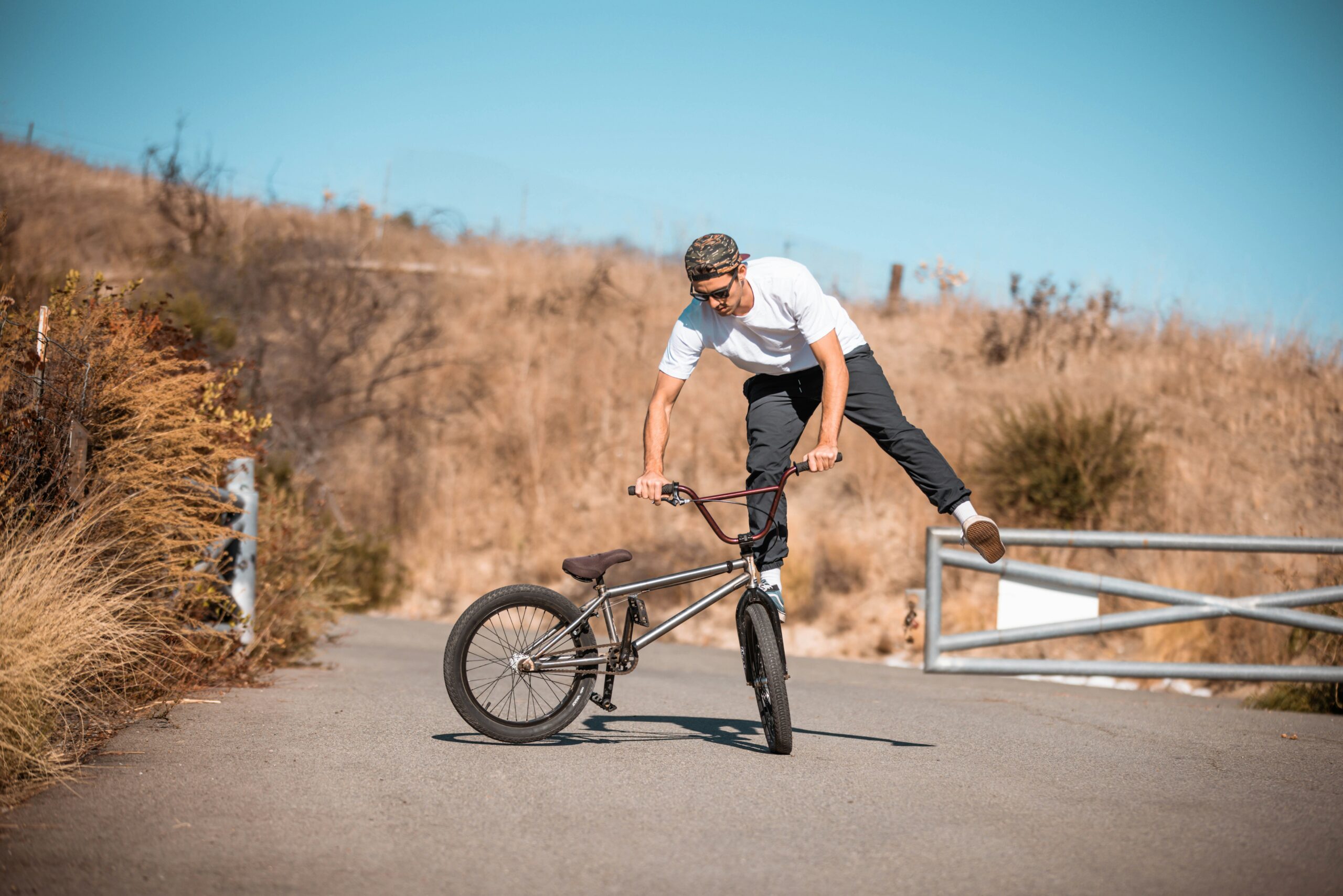
BMX might seem like an almost impossible machine to control for the first time that you see a practiced flatlander riding around the frame as he spins and balances. But BMX flatland tricks for beginners do not begin with complicated spins or high-risk maneuvers.It comes from something much easier and that’s basically learning to maneuver with small movements and without losing it.
Flatland BMX: this kind of riding takes places on an even floor, not on ramps or a track. A rider has to use his or her balance, motion, rotations, pivots and bike control. For riders exploring BMX flatland tricks for beginners, these fundamentals provide the foundation for developing control and learning more advanced movements over time. The sport is officially recognized by UCI BMX Freestyle, with competitions evaluating elements such as difficulty, originality, flow, style, and variety.
For a new rider exploring BMX flatland tricks for beginners, the smartest approach is not to chase the most impressive-looking trick right away.Instead, devote yourselves to mastering the core skills which are prerequisite and simplify the acquisition of the more complex tricks. Wheelstands, manuals, bunny hops, riding backwards, endos, controlled pivots – they all incorporate those foundational elements of balance, coordination, and bike control which eventually manifest as components of more advanced flatland.
Why Flatland BMX Is Different From Other BMX Riding
Flatland has its own rhythm, which is why BMX flatland tricks for beginners often start with learning how to control the bike rather than relying on ramps or speed. There is no jump ramp giving you speed and no race track indicating the way. The motion is entirely generated by the body, by application of pressure on the wheels, by guiding, and by pedaling, and momentum.
Which iswhy balance is crucial.
The UCI describes flatland as involving tricks, spins, balances, and transitions performed on a flat surface. For riders learning BMX flatland tricks for beginners, common elements include front-wheel and rear-wheel balance tricks, spins, pivots, peg movements, handlebar rotations, and circular combinations.The ability to perform these simple tricks leads on to greater balance, coordination and bike-control that would be necessary for more advanced flatland maneuvers.
So a beginner should look upon each trick as a balance exercise not as a demonstration of bike riding ability. If you can remain stable, shift you weight in a conscious direction and correct and control the direction of the wheels and then keep from falling you are well on your way toward many more complicated combinations.
The First Skill: Learn Your Riding Position
Before attempting a trick, become comfortable standing on the pedals.
Don’t ride like an ironing board If your legs look like they are 2 rods, you should probably not be. Don’t lock the elbows up either. Look forward, not down on the front wheel.
The reason for this is because what’s inside your head is how your overall center of gravity moves; looking straight down will make your nervous system over react to a bump you barely need to acknowledge.
Once you’ve sorted those parts out… Ride, and ride at the limit for you, in a relatively straight line, going round in tight (and then bigger and bigger) circles both ways, whilst standing up, then sat down, putting on pressure then releasing it by shifting weight fore and aft.
You are not wasting time by doing this. You are learning how the bike responds.
Find Your Preferred Foot
Your preferred front foot will eventually influence how you approach spins, pivots, manuals, and other movements.
The stance choice You can also have a go standing with one foot in front, then with the other one there again, and simply think about how one felt more natural than the other, or where you turned instinctively into a space or when you move to follow that other foot, when stepping. No-one needs to feel that there is a right way that has to apply – and actually what matters is the position that has allowed you to stay safe, controlled and confident.
1. Track Stand
The track stand is one of the best starting points for BMX flatland tricks for beginners because it teaches the rider to balance at very low speed or while nearly stationary.
The concept itself is pretty straightforward: prevent falling over by keeping upright with small inputs to your steering wheel and body. To practice, ride on a smooth, flat surface. Start to go a little bit and turn your front wheel just enough to bring yourself to a comfortable and stable position.
Position the bike on the flat where you feel good, bring your pedals back to level in any position, and just break.
This won’t last very long! Try to last at least 1 second in a proper attempt. You’re not trying to completely freeze the bike; you’re trying to make it balance by making small Corrections before you fall over completely. The flatter, the better to get started.
2. Endo
The endo is also good practice because it develops awareness of weight transfer towards the front of the bike. Roll on to it on a slow, comfortable speed, gently squeeze on your front brake, and allow your hips to shift forward sufficiently so the rear wheel lightens. Don’t immediately concern yourself with throwing the rear wheel up into the air.
At first, concern yourself only with knowing the bike and what the brake and your bodyweight feel like.
Use abundant open space and avoid any jerky movements. Often, a newbie error will be snatching the front brake; doing that will cause an ungraceful shift and leave a person flustered by the steering. Smooth moves will teach you more than anything else, even more than the number of inches the rear wheel travels skyward. When you reach a point where you can repeat lifting the back of the bike with your body, gently lowering the rear wheel, you have learned an integral component of front-wheel equilibrium.
3. Bunny Hop
Thebunny hop isn’t just a flatland trick, but it’s possibly the most helpfulBMXfundamental that you can master. It will get you to feel connectedwith your legs, hands, hips, and bike and how they need to sync together. Practice the action without thinking about height yet.
Learn to shift your weight, raise you front wheel, and then lift the rear wheel after – without trying to get into the air as much as possible immediately.
Having a low, consistent hop that you have under control is far better than high bunny hopes to an unsteady landing. Bunnyhopscan teach you the process of moving into each step, which youwill need to use formore technical skills.
4. Manual
The manual requires learning how to balance a bicycle while balancing on a bike and wheel while not pedaling continuously. The balance point can take a while to adjust to as the bike will fall while beginning so it can get discouraging at first. Work toward gradual front wheel lifts, rather than quickly yanking handlebars up by forcing motion your hips backwards while staying stable.
Find a balance where the front wheel doesn’t drop by maintaining a strong rider-to-rider communication between and you “and“ your bike through hand-feet positioning and balance adjustments.
If the front wheel still falls to the ground by you leaning too far back you will likely wind up falling; try to be in control; if you ever find you’re about to fall backward, shift your weight back onto “your” feet by jumping over the rear wheel-that action itself is known as “looping out”. In BMX community talks, the importance of finding balance is constantly brought up instead of just learning to pull back. For this reason you won’t see many people practice for several months straight in order to get the ideal hundred-something mile manual while only few have mastered long manuals through gradual front-wheel lift improvements with small fews on-the-wheels instead of continuous attempts.
5. Riding Backward
Backward riding, the basis for a fakie, also presents a way of learning how to steer the bike somewhat differently.
Start on something large and smooth. Just learn to roll backward a few feet without losing control of the handlebars.
The trick itself doesn’t need to be full, yet. You just need to learn to feel yourself riding backwards.
With feet still assisting you, learning to move backwards is a good way to learn to steer and balance, before learning to pedal backward constantly.
Then, once backward motion is mastered, you just need to learn the opposite way back forward.
6. Fakie
Simply, a fakie involves moving or maneuvering forward and then traveling backwards. Beginners typically will struggle more not with actually riding backwards than controlling the transition. Take it at slow speed.
Try and get a feel for what your bike is doing when traveling in reverse, and then with the steering and leaning control get your bike around for the ride forward.
Dont start in on doing a fast fakie; rather work in getting the fakie with you being able to maintain a balance on the bike slowly because the more slowly that you can ride, the better will you learn what each part of the bike is doing. As your BMX skills start to develop the fakie proves really helpful in many trick finishes of which commonly end in a backward roll.
7. Pivot Turns
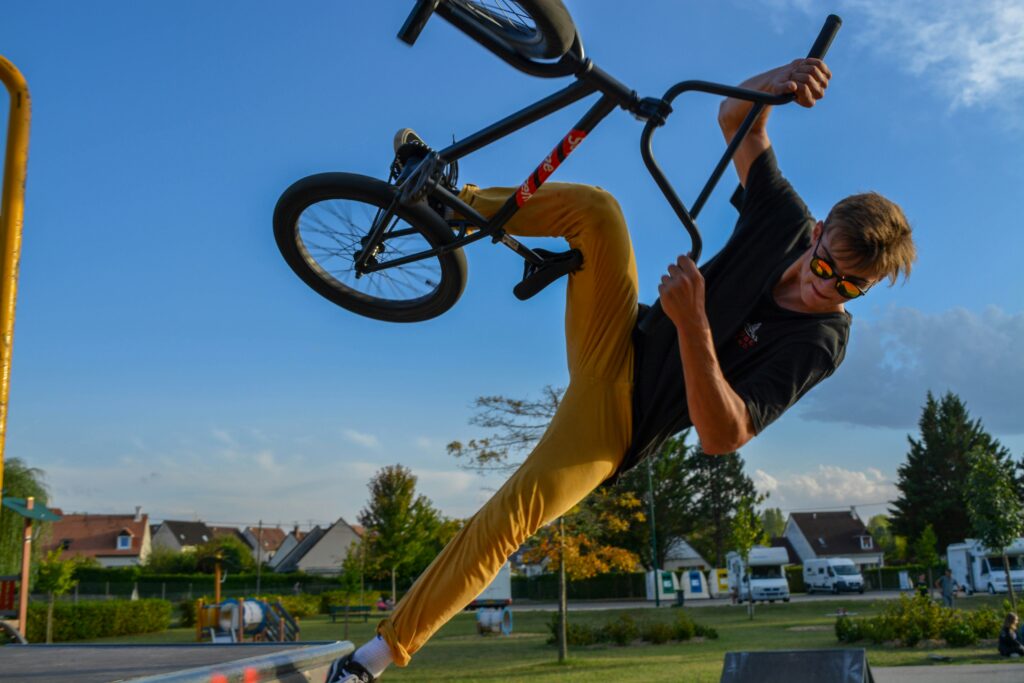
Pivoting involves your bike turning on the hub of one wheel or controlled contact. Begin by making very modest turns, try taking one of bike ends off the ground, unload the front end slightly, and use your body to turn handlebars while maintaining balance. Learning the body/ bike synchronization is key.
Instead of trying to think “I need to spin the bike around”, concentrate on “I need to get my body off line, steer, and let the bike go.”
That mental paradigm can lead to a much more productive practice session. Once you get a fundamental pivot, they may simply serve as the beginning of transitions between other flatland tricks.
8. Peg Balance
Peg TricksBMX BikeThe peg tricks are essentially all tricks and styles of BMX that primarily utilise pegs to maintain the bike balance and used by the flatlands riders as their base, feet stand on the pegs, which eventually becomes another extension of your balance along with your bike. The use of pegs is of utmost importance and are particular components for flatland BMX bikes, states UCI.
The bikers mount their balance and used the pegs in various stages of the tricks. Peg bikes; not good for the beginners to jump up directly in peg combination as it is a high-level trick and requires immense attention; rather one should master their feet on the pegs, which not only requires you to just put one foot on to the peg; but at the very low speed, you can keep a better balance with your bike in the ground on a clear field and just a bike weight is your centre of mass.
9. Barspin
The barspin consists of rotating the handlebars around, while maintaining full control of the bike.
Though easy looking when executed by a master, those new to performing barspins, and the others that utilize them, first need to gain confidence in their grip, position on the bike, and general bike control.
Try working on the motion by just spinning around and attempting the release in mid-air, alone, if need be. Observe the path the handlebars take around the circle and the need to reach up high for it again.
There is no reason to try this at top speed just because the entire trick is not very long.
Being in a safe, controlled environment while a bike is in proper working order are crucial elements for practicing any sort of handlebar rotation trick.
When writing about beginner friendly fatland bike tricks, FatBMX suggests the barspin with surfers, peg wheelies, backwards steamroller, and others.
10. Surfer
The surfer is pretty a common flatland move that will build the riders ability to develop a certain style of ride, help out balance & position etc, and confidence while still keeping yourself mobile on the bike, it’s for sure a good movement, although i’m probably more inclined to do it as the second or third trick someone learns on a bike, right after getting more basic skills down first. It requires the rider to break their riding posture while keeping bike under control. Often times if this does go wrong, this will quickly show some weaknesses inbalance, because the riding posture is quite odd looking.
Try to do it slow and try to not tense up.
The idea really, isn’t the ‘pose, we’re trying not to look stupid and can really take care of our bicycles while breaking the riding style for a second’.
How to Practice Without Getting Stuck
What Many Beginners Do Wrong One major mistake I see is repeating a trick over and over again without recognizing what exactly is failing. Let’s take the example of the manual. If your front wheel keeps dropping down on every try of the manual, performing 100 more tries without modification probably wont solve your issue.
Instead, break the movement into distinct steps.
Are your hips far enough back?
Pulling back on bars too hard, riding with heads down, reaching to lift the wheel too high? Breaking down a movement provides distinct focal points for what needs to be worked on.
A Simple Beginner Progression
Develop a Staircase Instead of trying to learn ten tricks at once, build a staircase. Get control on plain old riding, tight turning, standing balance, and smooth stopping; then proceed on to an endo, a track stand and then build up to a bunny hop and a manual as soon as you’re comfortable handling the bike from a standing position. Lastly comes learning backwards and the fakie and with practice will come some rudimentary use of pivoting, peg balancing, and a little coordination.
The order you choose does not need to be strictly ordered because everyone learn’s differently, but is only important in that all subsequent moves generally built upon earlier control over the bike.
A recent beginner BMX learning tool also puts a track stand, a manual and a bunny hop into a group of fundamental moves that lend to learning easier future tricks.
Safety Matters More Than Trick Progression
While Flatland can be played on level terrain, flat terrain does not equal risk free.
A properly fitted BMX helmet is especially important when you’re learning or attempting a new trick, helping reduce the risk of serious head injury during falls. Additional protection such as gloves and other pieces of equipment can be useful depending on the type of trick and riding circumstances.
Select a smooth, traffic free road surface, with loose gravel, potholes, pedestrians or other obstructions.
Inspect the bike before you practice. Be aware of the condition of the tires and the security of the wheels, brake and handlebar systems, pedals, and any other factors that might influence control.
It is best not to train when you are tired. Tiredness reduces your ability to respond to balance alterations and may lead to inattentive form.
The main thing is just don’t move on to the next trick because someone else is riding a more difficult trick.
Flatland is a game of patience. A rider who dedicates significant effort in learning to develop exact balance will tend to have a much more solid base to work from when transitioning to complex combinations than a rider who zips in there too quickly.
What Beginners Commonly Get Wrong
The first mistake is trying to learn advanced tricks too early.
The second is using too much force. Many flatland tricks look dramatic but actually depend on small, precise movements.
Another common problem for beginners is bike balance and control, especially when staring at the front tire instead of looking ahead. Looking ahead generally makes it easier to maintain awareness of your direction and body position.
Beginners can also become obsessed with duration. Holding a manual for one second with excellent control is more useful than holding an unstable manual for five seconds before crashing.
Remember that every rider develops at their own pace, so don’t compare your progress with someone else’s.Balance skills can develop at very different rates.
When to Move to More Advanced Flatland Tricks
When those base elements aren’t something you trip into and can control with your own will, that’s a sign you can move up the steepness ladder of hardness in trick progression. You should be comfortable balancing at the front of your back wheel and can control it for an extended time (the elusive trackstand); you should catch yourselves recovering from balance correction quite smoothly, ride backward and forwards at command and understand how shifting weight affects this all. From that point, a rider might consider moving up to concepts such as: squeakers, steamrollers, hangfives, hitchhikers, whiplashes, to name but a few and combined motions.
If you look for flatland trick charts and references, they will typically be listed somewhat by difficulty from balance-based movements on up to more trick-specific and physically demanding things.
However, every ride progresses at their own pace; only one question counts and that is whether or not you can reliably complete, and be comfortable dismounting, a ride.
Conclusion
Learning BMX flatland tricks for beginners is less about collecting impressive tricks and more about developing a conversation between your body and the bike. Stationary stands make practice balance, manuals help you to master balance on rear wheel, bunny hops are essential for good coordination, and riding backward develops an alternative steering position and a whole new understanding of controlling momentum. When all of these building blocks are firmly in place, new tricks from back spins and peg balances to barspins and surfers begin to click. You understand intuitively how changes in balance and rider position translate to the bike’s behavior.
The ideal approach to this aspect is also time and patience.
Start at safe practice grounds and on reliable terrain and never worry about height or speed during the initial practice sessions. Take it one tiny movement at a time and, if necessary, breakdown complicated maneuvers into simpler components. There are always more tricks to attempt and invent on flatland but talented cyclists still rely on same fundamental principles of coordination, technique, coordination, synchronization and relentless practice.
Frequently Asked Questions
1.What is the easiest BMX flatland trick for a beginner?
A track stand is one of the best starting points because it teaches balance at very low speed. Basic endos and controlled pivots can follow once the rider is comfortable.
2.Do I need a special BMX for flatland?
A purpose-built flatland BMX could simplify specific tricks as flatland bikes are typically conceived around balance, dexterity and trick control. Some simpler flatland maneuvers are nevertheless possible to practice on a BMX that doesn’t have the relevant hardware.
3.How long does it take to learn BMX flatland tricks?
There is no reliable universal timeline. Simple balance skills may develop relatively quickly for some riders, while manuals, fakies, and more technical tricks can require much longer practice.
4.Should I learn a manual before a fakie?
It is not mandatory, but learning basic manual and balance control can improve your overall bike handling. The most useful progression is the one that lets you understand each movement before adding another layer of difficulty.
5.Can I practice flatland BMX without a skatepark?
Yes. Flatland is specifically performed on flat surfaces, so a suitable smooth, open area can be enough for many foundational skills.
6.Are BMX flatland tricks dangerous?
Falls are possible, particularly while learning balance tricks. A helmet, appropriate protective equipment, a properly maintained bike, and a clear practice area can help reduce unnecessary risk.
7.What should I learn after the beginner tricks?
When you have your flatland balance and control to a consistent level, then you can begin playing with combinations of squeakers, steamrollers, hang-fives, hitchhikers, whiplashes and other “trick” movements in flatland. Develop at a steady pace, rather than simply selecting trick names on how cool they sound.